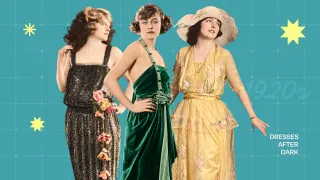
A night out in the 1920s was a chance to dress up, stand out, and enjoy a fashion world that was changing fast. Evening dresses became lighter, looser, and more playful as the decade moved on, with shimmering fabrics, beads, fringe, and elegant details designed to catch the light.
In this article
What Did “Evening Dress” Mean in the 1920s?Early 1920s Evening Dresses (1920–1923)Mid-1920s Evening Dresses (1924–1927)Late 1920s Evening Dresses (1928–1929)What Women Wore for Different Nights OutFabrics, Beading and Art Deco DecorationAccessories Worn with Evening DressesWere All 1920s Evening Dresses “Flapper Dresses”?
The look of 1920 was quite different from the look of 1928, which makes evening fashion quite interesting to follow through the decade.
In this article, we’ll look at how 1920s evening dresses changed over time, what women wore for different nights out, and which fabrics, decorations, and accessories helped create the complete look.
What Did “Evening Dress” Mean in the 1920s?
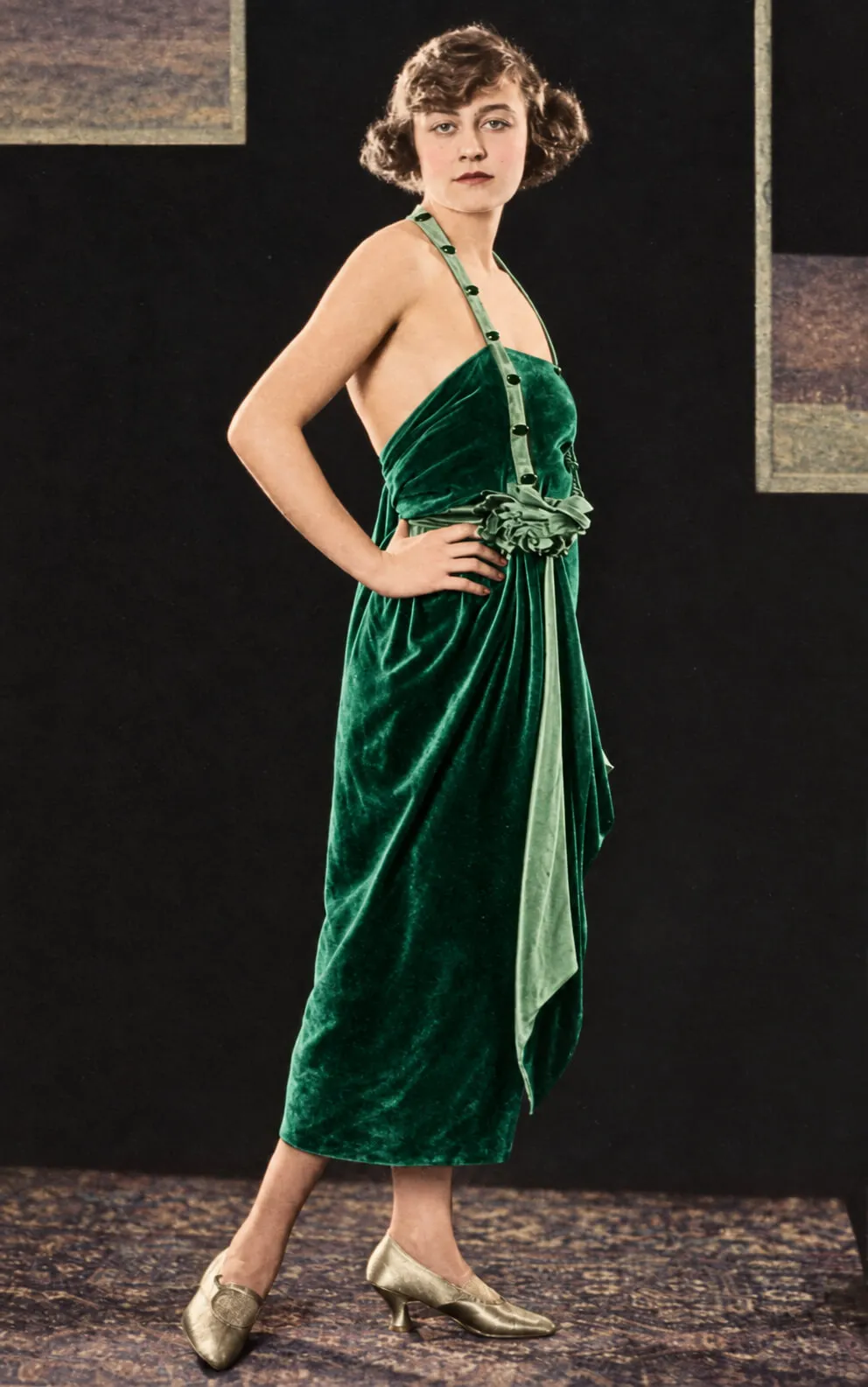
“Evening dress” was a broad term in the 1920s, covering several levels of dress worn after the daytime wardrobe was put away. Women still followed rules about what was suitable for different times of day although those rules became more relaxed after World War I.
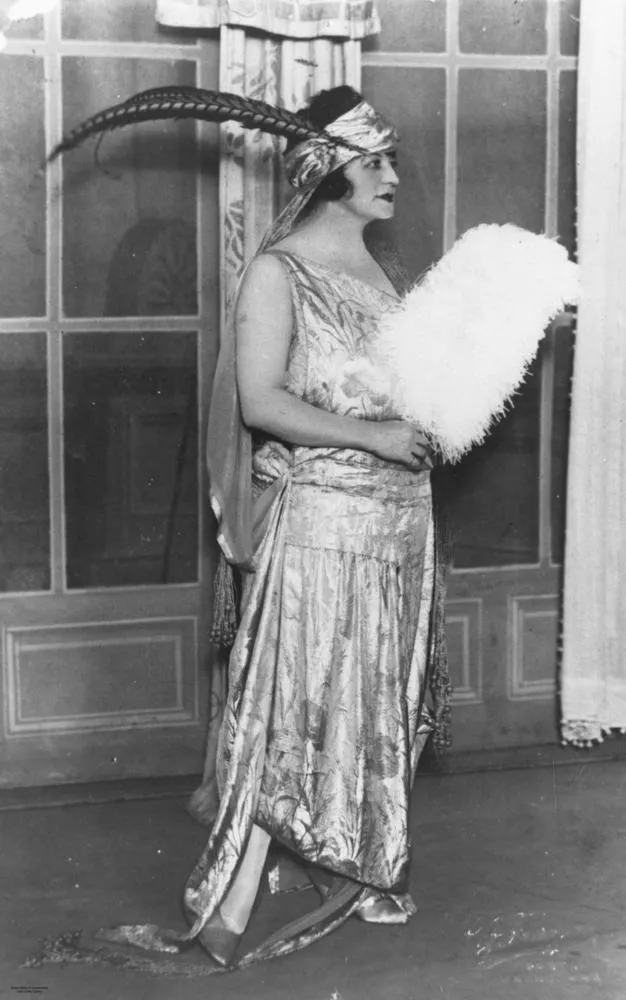
Dinner dresses usually sat between daytime clothing and the most formal evening gowns, while richer silks and more decoration were common after dark.
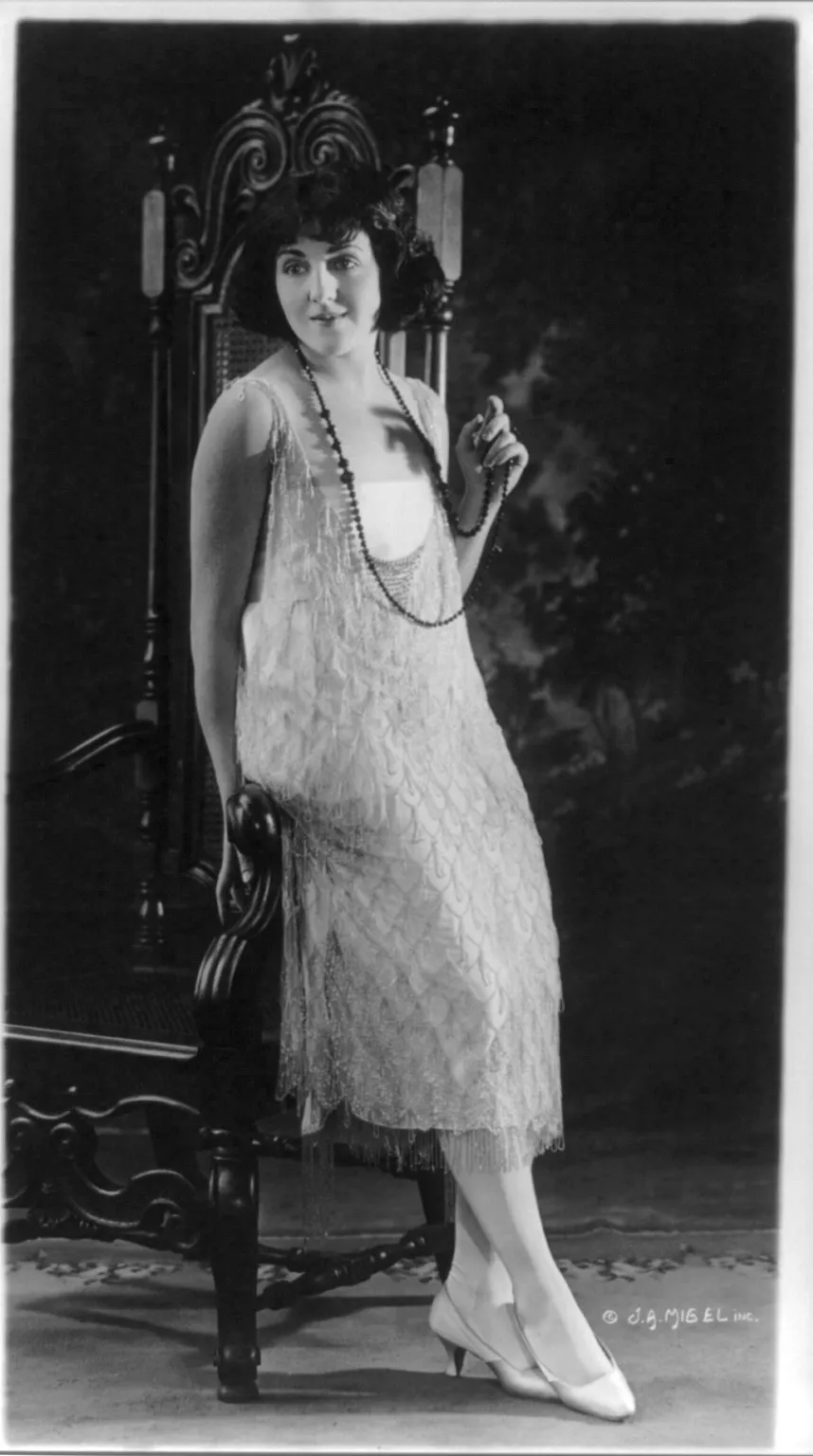
The basic shape could remain quite simple, but lower necklines, bare arms (the above image if Helen Halperin is a good example) finer materials, and decorative details helped separate eveningwear from everyday clothes. You can see this change in the decade’s evolving eveningwear styles.
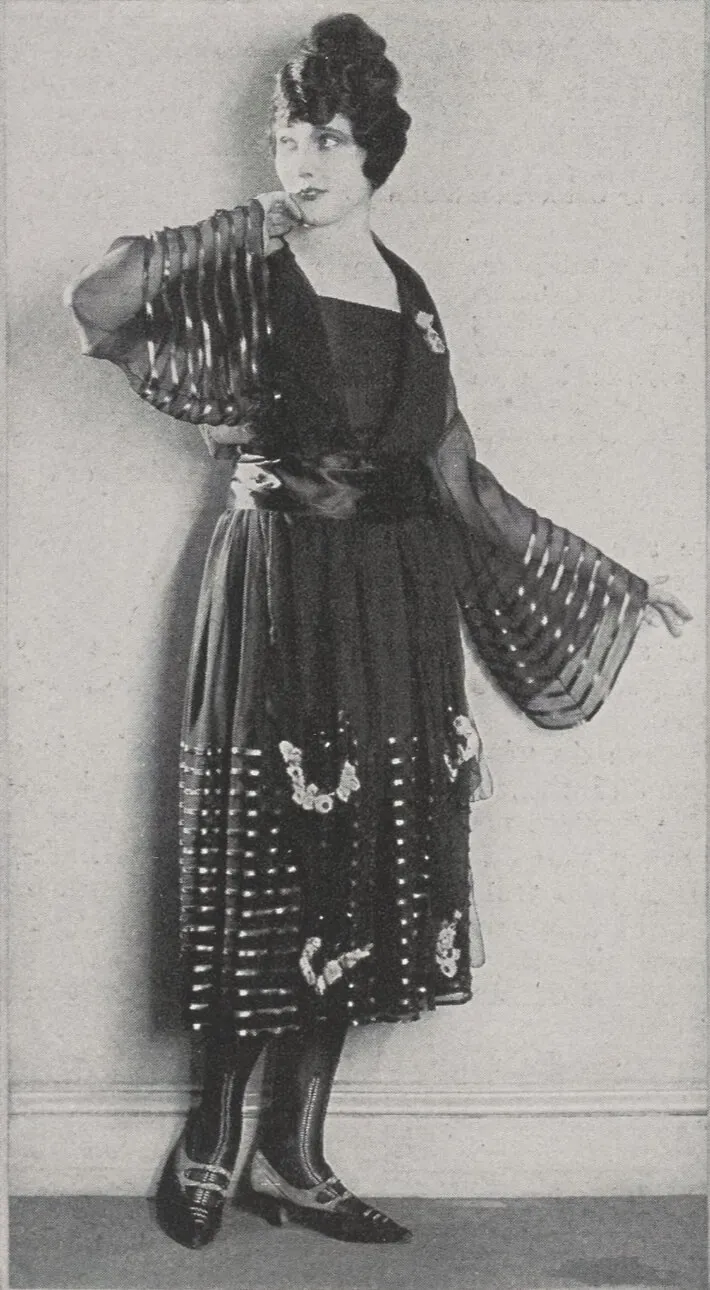
The term could therefore describe anything from a fairly restrained dinner dress to a heavily decorated gown or a loose dress made for dancing.
Type | What It Usually Meant |
|---|---|
Evening Dress | A general term for dresses worn after daytime hours, from simple to very formal styles. |
Dinner Dress | A refined evening dress, usually less formal than a full evening gown. |
Dance Dress | A lighter dress that allowed easier movement while dancing. |
Evening Gown | A more formal dress, often made from richer fabrics with more decoration. |
The familiar beaded flapper dress was only part of this wider evening wardrobe. Shoes, jewelry, stockings, wraps, and other flapper dress accessories could then change how formal or fashionable the complete outfit appeared.
Early 1920s Evening Dresses (1920–1923)
Evening fashion in the first few years of the 1920s still carried clear traces of the previous decade. A Callot Soeurs evening dress from about 1915 already shows designers experimenting with softer construction and freer draping, even though its fuller skirt and higher waist still belonged to an earlier look.
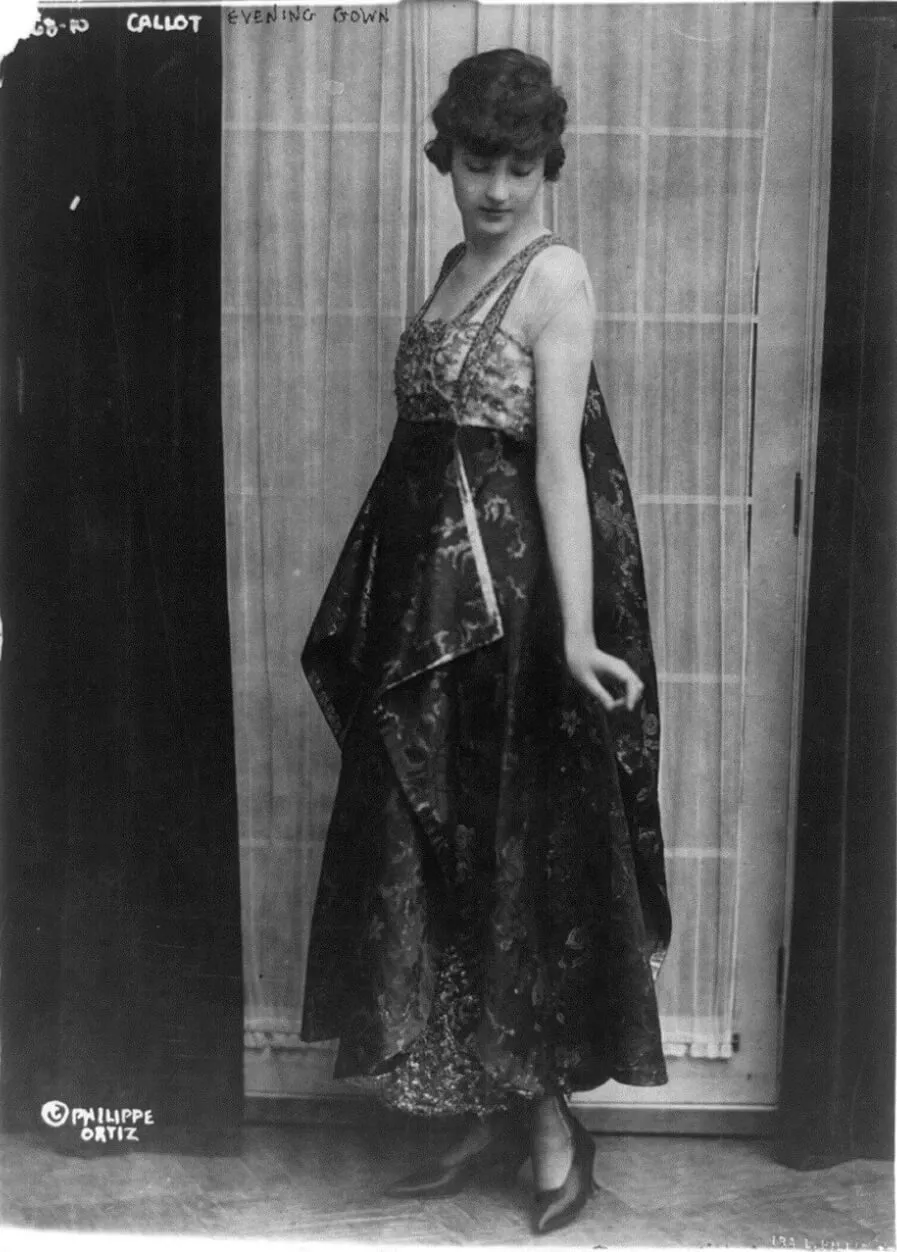
From 1920 to 1923, waistlines continued to move lower and skirts gradually became shorter, although many evening dresses still reached well below the knee or even close to the ankles.
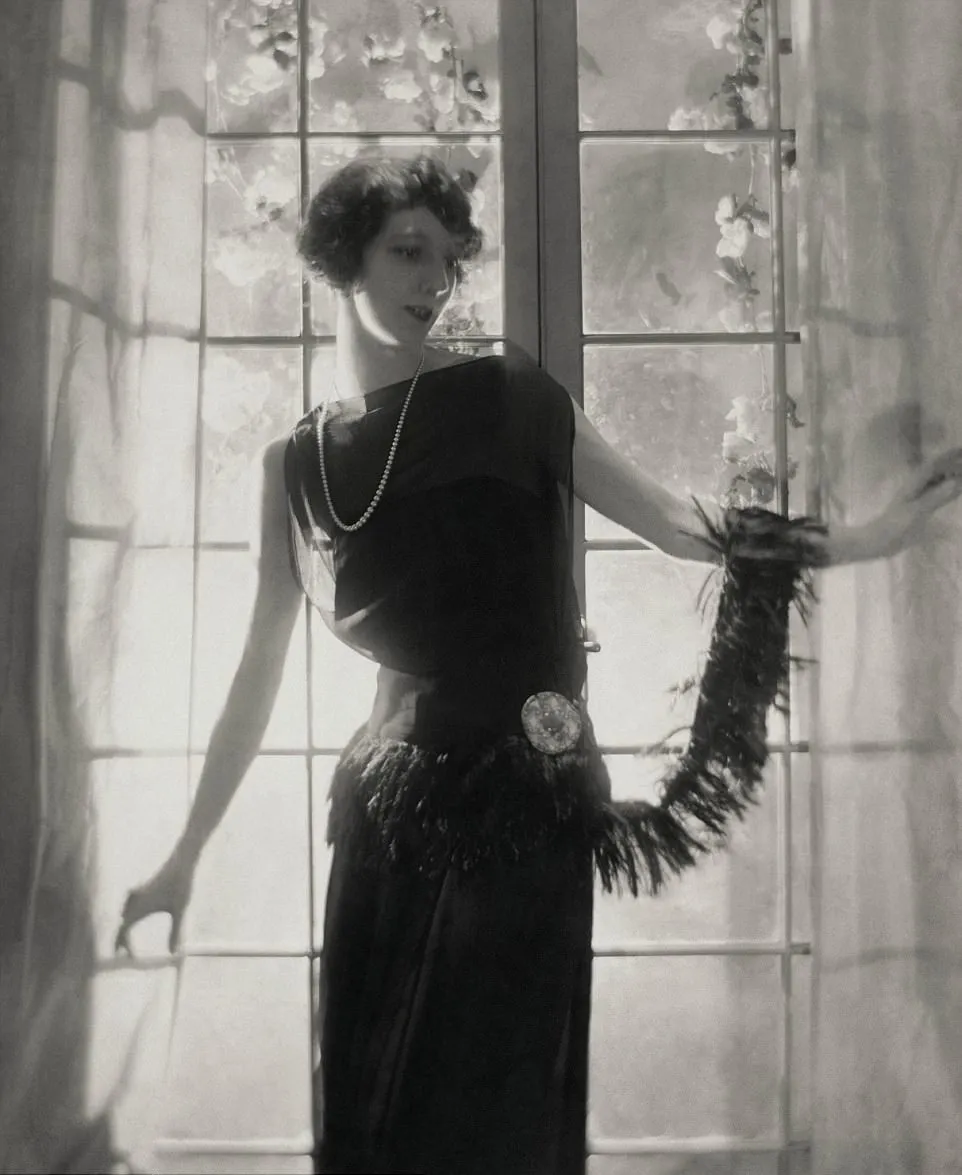
Paris couture houses had a huge influence on these changes. Jeanne Lanvin and the House of Lanvin became especially known for the robe de style, with its fuller skirt and often decorative surface, while Paul Poiret continued experimenting with loose draped shapes.
Madeleine Vionnet was developing her clever bias-cutting techniques, and Jean Patou and the House of Patou were also gaining attention for simpler, more modern lines.
A May 1921 fashion page in the New York Tribune captured this change while it was actually happening. The writer remarked on how simple fashionable clothes had become and described floating panels as a continuing favorite.
One illustrated evening dress used black lace and tulle with long leaf-shaped panels falling toward the ankles, while a Jean Patou design used black Chantilly lace with long gray and green chiffon scarves at the sides.
Mid-1920s Evening Dresses (1924–1927)
Between 1924 and 1927, evening dresses became shorter, straighter, and easier to move in. The dropped waist stayed fashionable, while sleeveless chemise-style dresses with wide necklines became common for dancing.
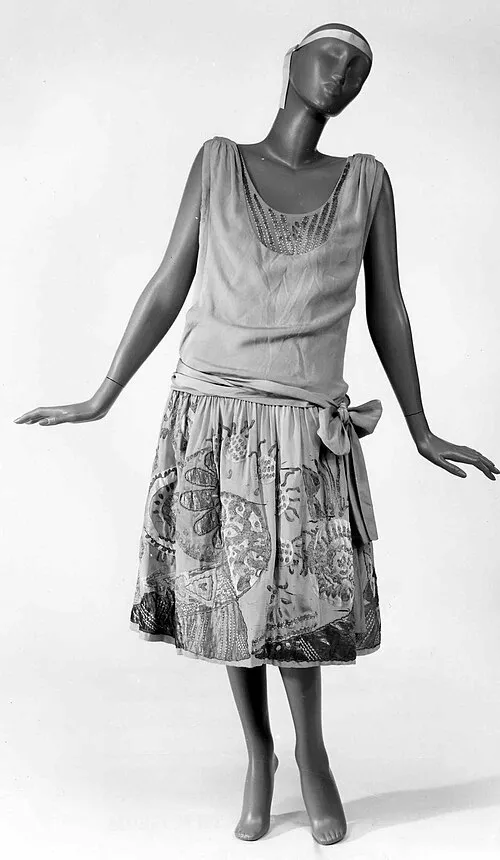
Hemlines reached their highest point around 1926 often falling around the knee or just below it. Evening dresses were usually much more decorated than daywear, with glass beads, rhinestones, sequins, metallic thread, fringe, and floating skirt panels that moved with the wearer.
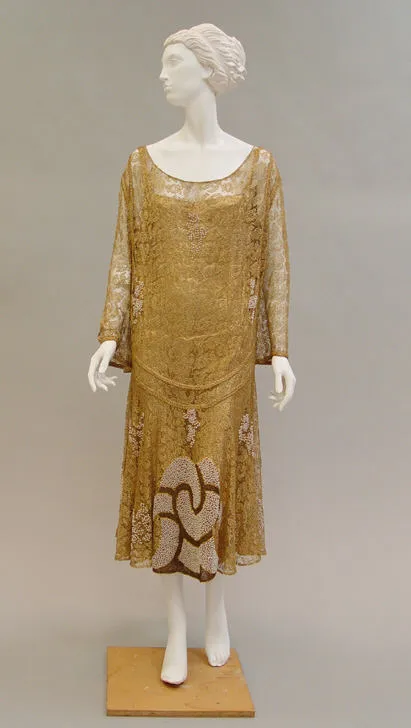
Silk chiffon and lamé were popular choices, and geometric Art Deco patterns appeared alongside floral and “exotic” designs.
Jeanne Lanvin’s turquoise beaded Salambo dress from 1925, now in the V&A collection, was shown at the 1925 Paris exhibition and used the oriental-inspired decoration that was fashionable at the time.
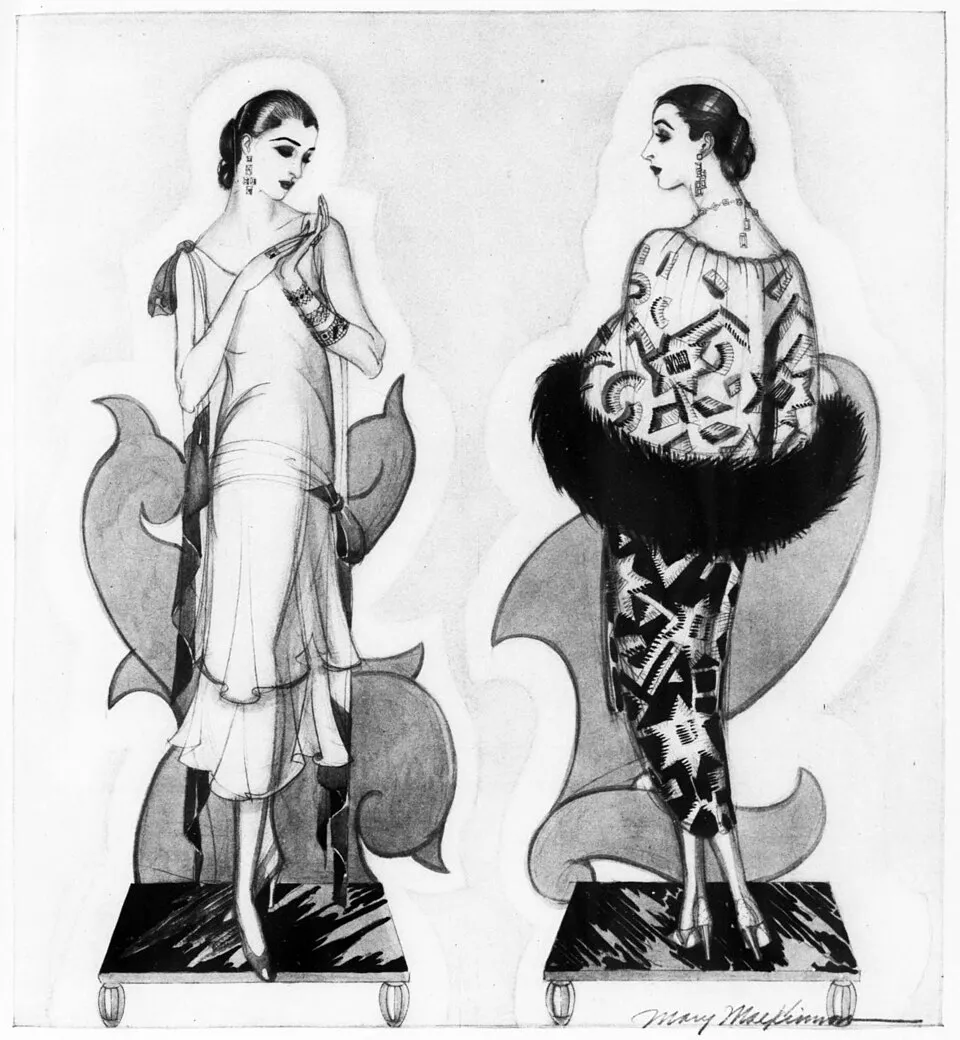
Chanel also produced tubular evening dresses with beadwork defining the bust, dropped waist, and hips, while other French dresses used scalloped beadwork, metallic lace, and sequins to catch the light during dancing.
Late 1920s Evening Dresses (1928–1929)
By 1928, evening fashion was moving away from the short, straigt silhouette associated with classic flapper style. Dropped waists, sleeveless bodices, beads, and fringe were still seen, but skirts began to grow longer and the shape became more fitted through the hips.
A 1928 fashion report described fuller evening gowns that could touch the floor at the back, replacing some of the very narrow one-piece frocks of earlier years.
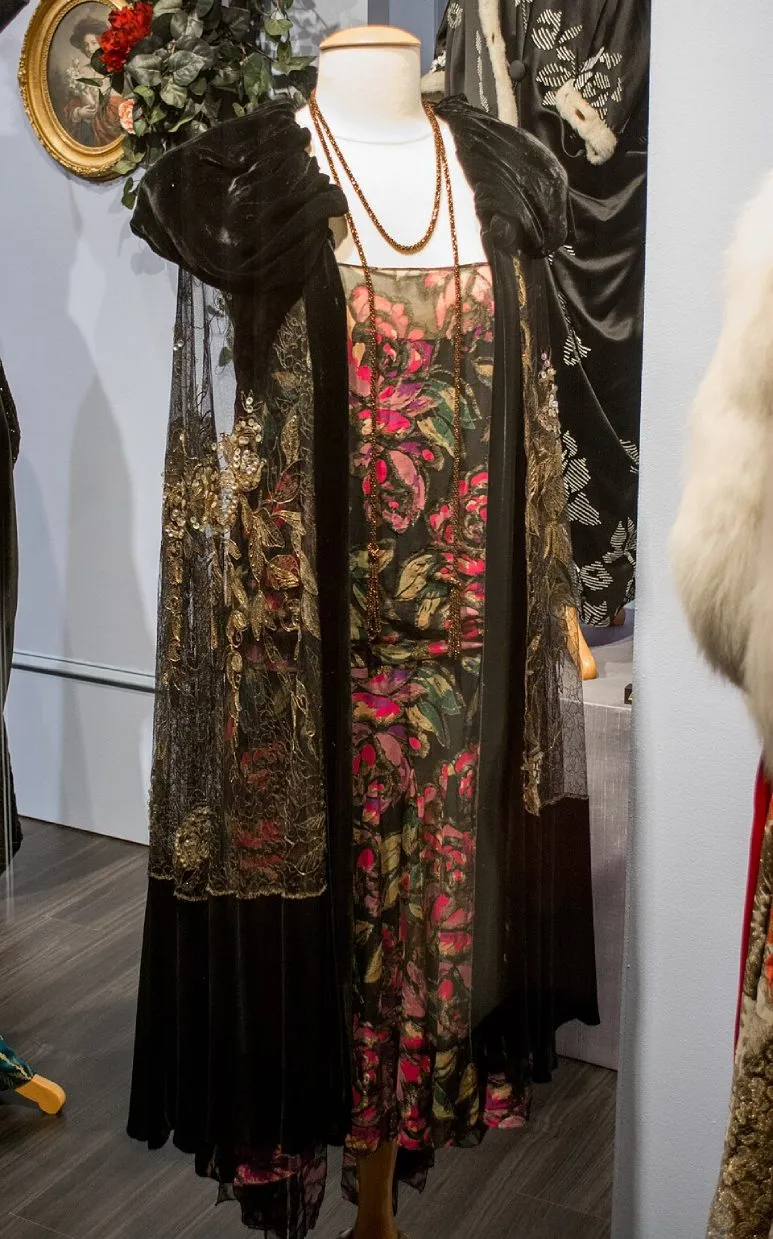
Uneven hems, especially skirts that dipped at the sides or back, were particularly popular, along with black velvet, satin, lace, tulle, and chiffon.
Waistlines were moving upward again, backs were cut lower, and ankle-length gowns or dresses with small trains were appearing more often.
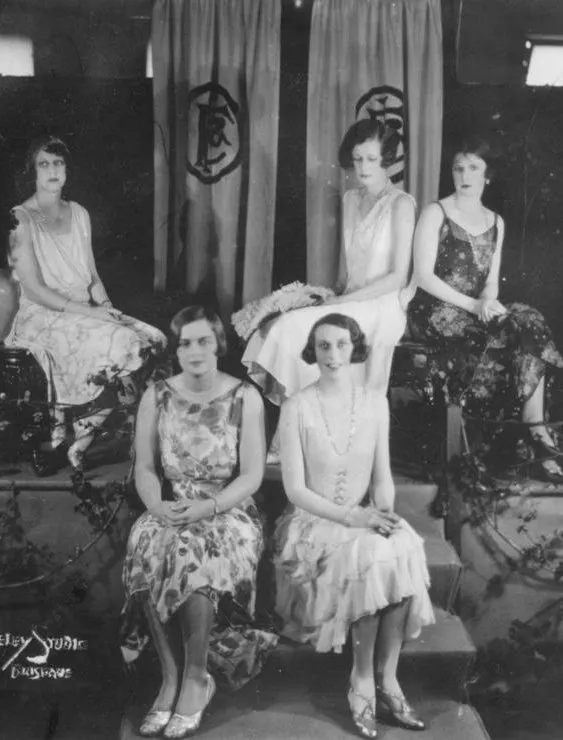
Lois Long reported from Paris that winter evening dresses had become longer and that black, green, brown, velvet, and gold lamé were prominent in the new collections in The New Yorker.
In February 1929, a TIME fashion report from the Paris couture openings noted rising waistlines, longer skirts, demi-trains on many evening gowns, and slimmer bodices cut lower at the back.
What Women Wore for Different Nights Out
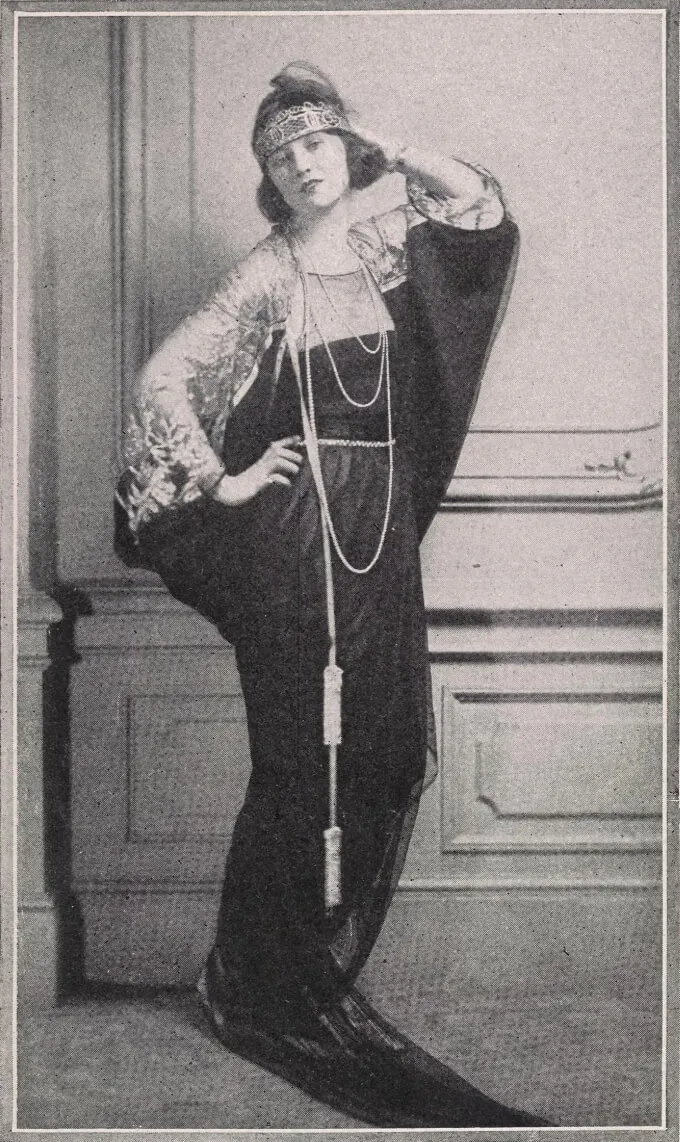
In the 1920s, a night out could mean very different things, and the dress often changed with the occasion. Women chose their evening clothes acording to where they were going and what they expected to do once they got there.
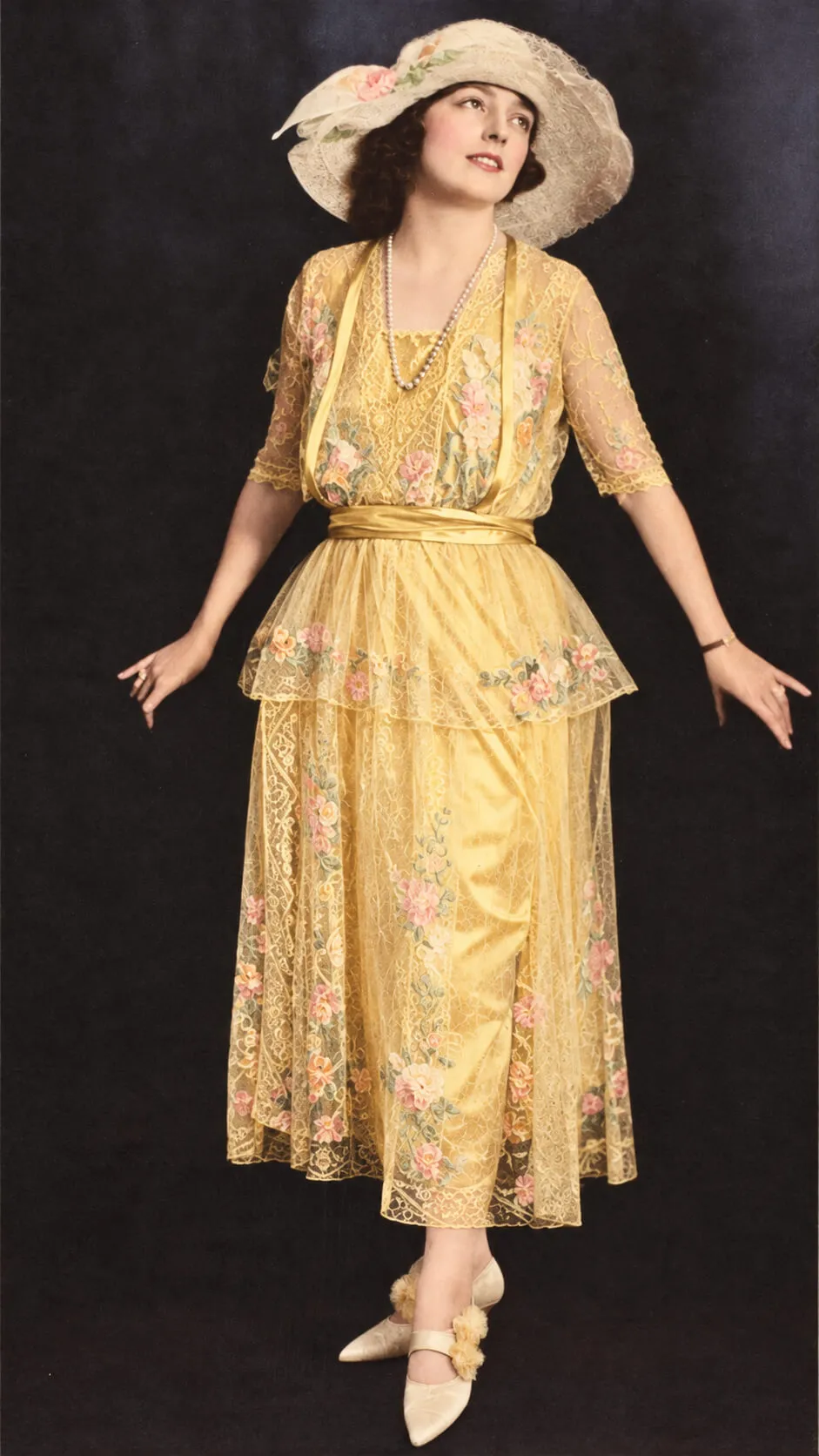
A 1920 article in Shadowland divided eveningwear into different levels depending on what the woman planned to do.
For dancing, it recommended a shorter dance frock that gave the legs more freedom, and it singled out taffeta as a fashionable choice because of its crisp feel.
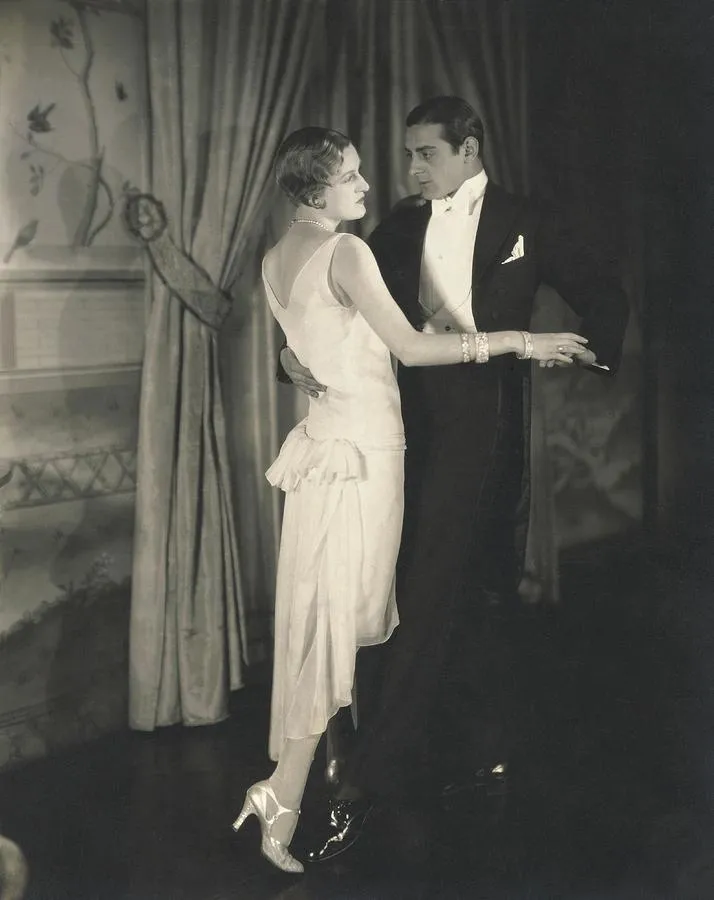
For an evening without dancing, the magazine described more formal gowns with longer lines and trains. Emily Post’s 1922 etiquette guide makes the same distinction in everyday social life. At an evening theater performance in New York, a woman normally wore a dinner dress, while formal dinners, balls, and opera visits could call for more dramatic evening dress.
Nightlife also included restaurants and speakeasies, where beaded and decorated dresses were more effective under indoor lighting and while dancing.
Dinner: A dinner dress, usually elegant but less elaborate than a full formal gown.
Theater: Dinner dress was a standard choice for an evening performance.
Dancing: Shorter dance frocks with room for movement; Shadowland recommended taffeta in 1920.
Nightclubs and speakeasies: Beaded, sequined and embroidered dresses worked well for dancing and artificial light.
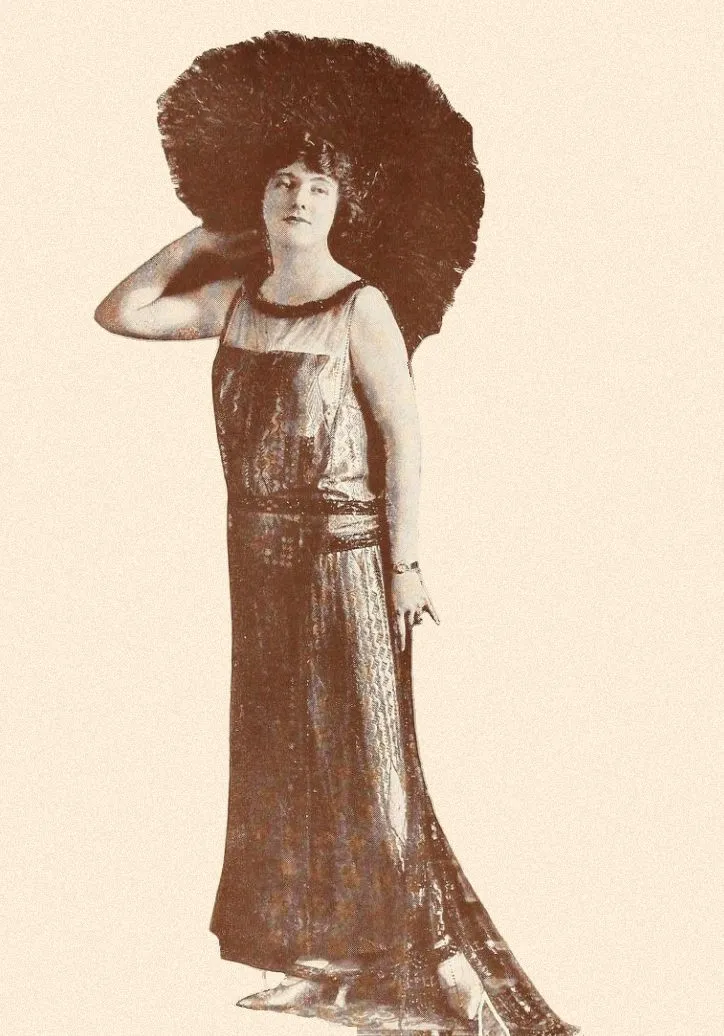
Balls and formal receptions: Longer, more elaborate gowns, sometimes with trains (the above photograph by Apeda is a great example).
Opera: Among the more formal evening occasions, especially when attending in a box.
Fabrics, Beading and Art Deco Decoration
Evening dresses gave designers more room to use luxurious fabrics and decoration than everyday clothes. Silk chiffon, satin, tulle, velvet, and lamé appeared alongside glass beads, sequins, crystals, metallic thread, and fringe.
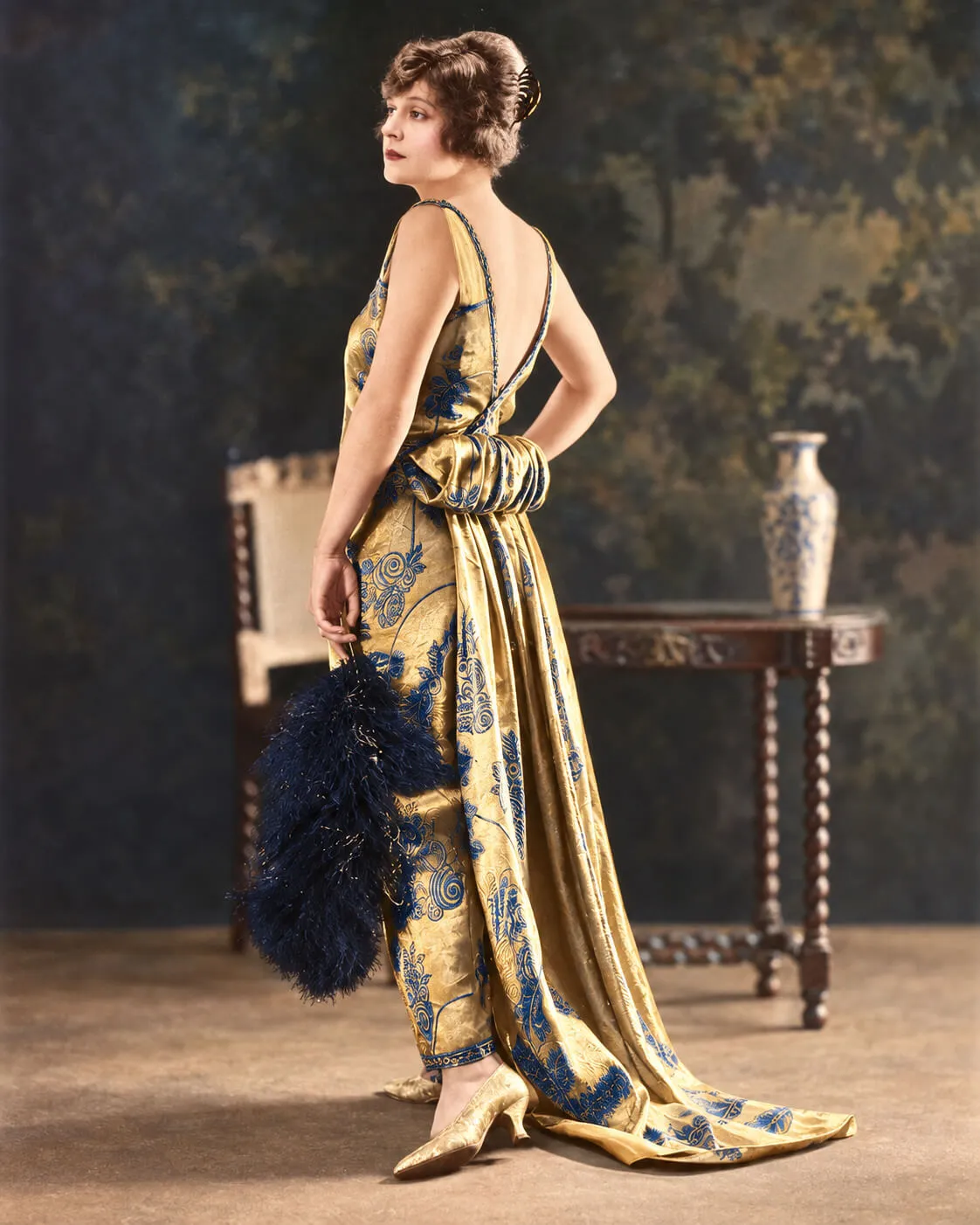
Art Deco brought geometric lines, chevrons, stylized flowers, and bold contrasts into dress decoration. A beautiful 1925 evening dress in the National Gallery of Victoria combines pink sequined roses with a black-and-silver chevron pattern and a bodice covered in shimmering diamantés. Period fashion pages also recorded plenty of variety.
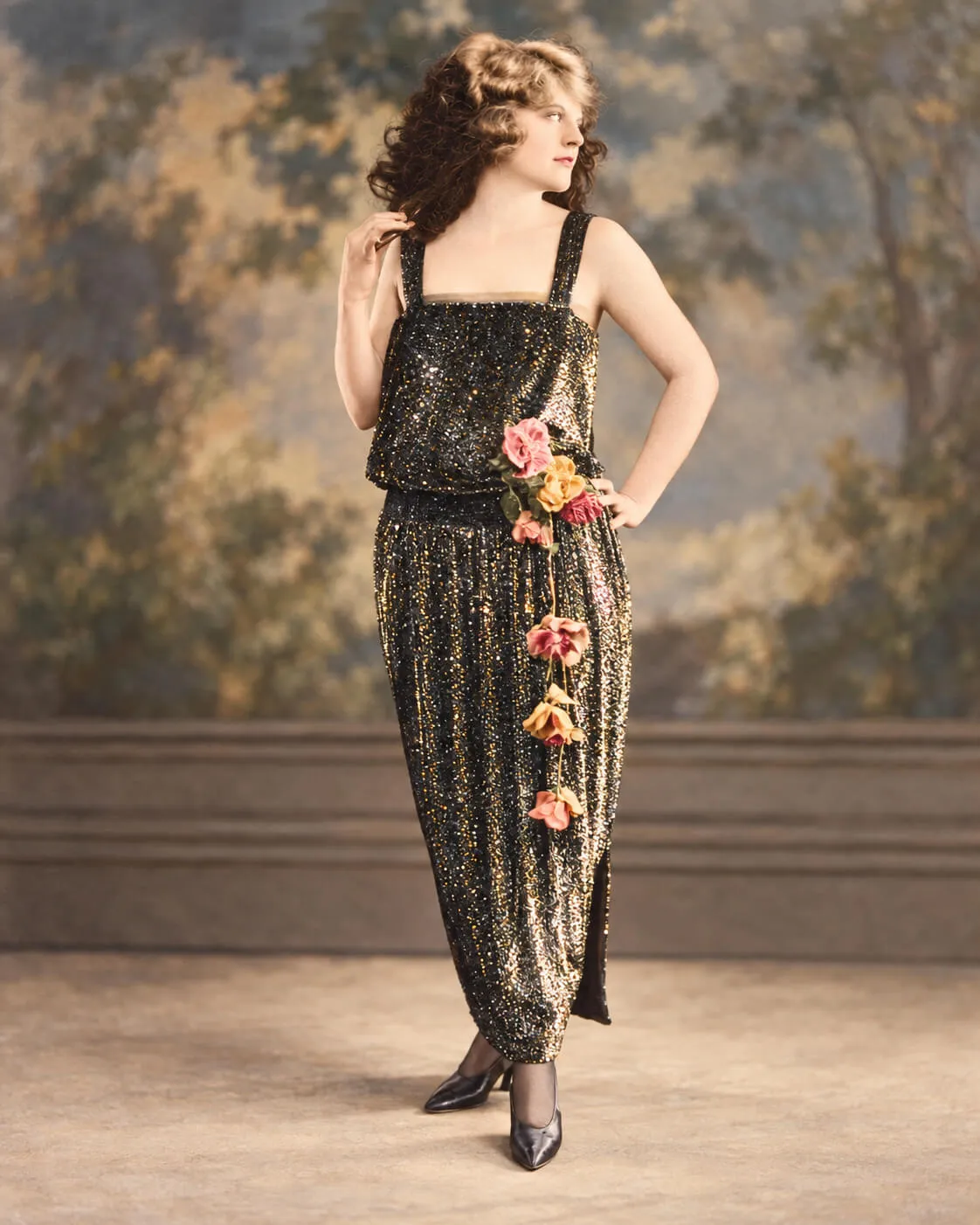
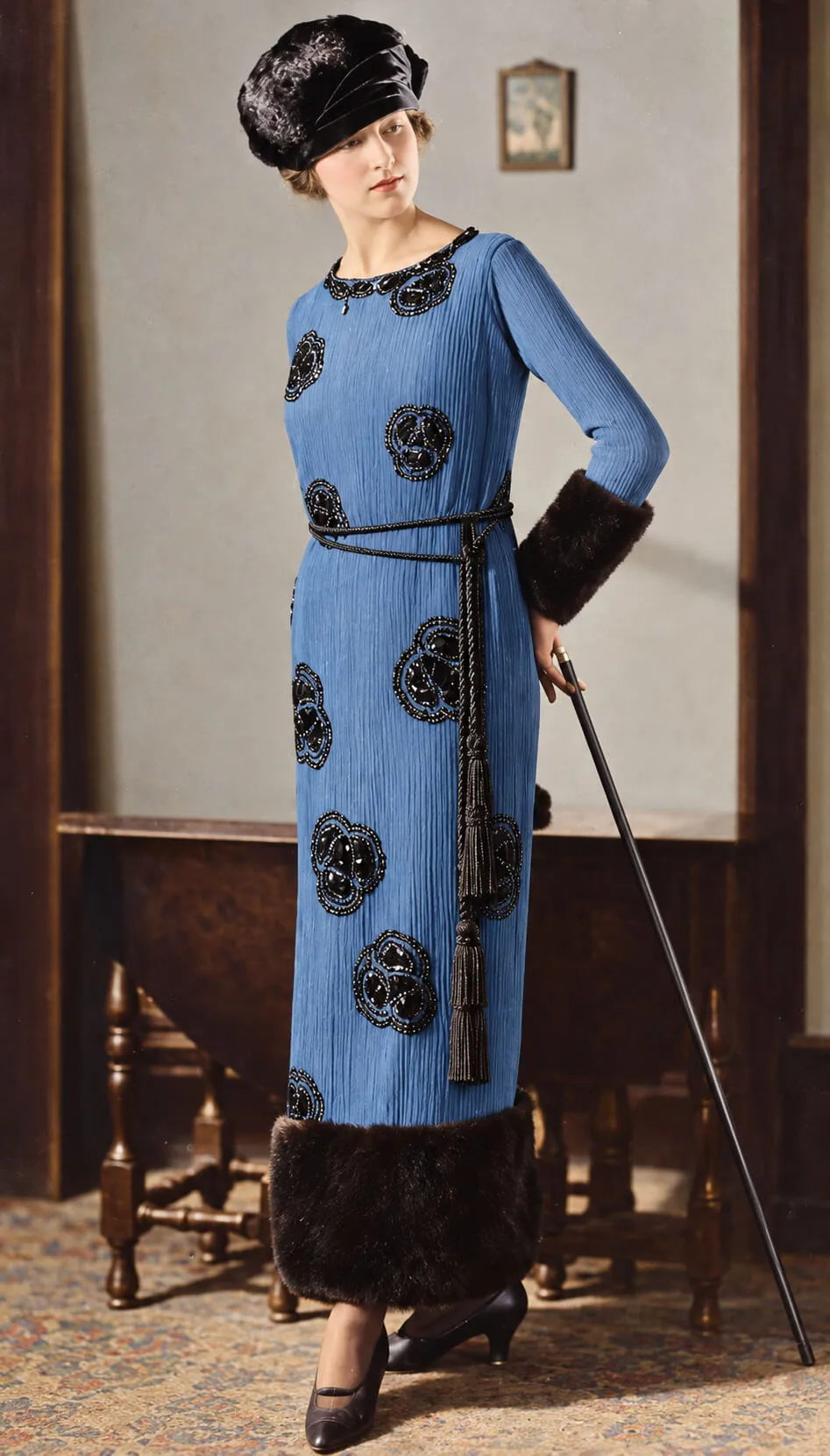
A 1920 Shadowland dress supplied by Bonwit Teller & Co. was covered in paillettes with colorful roses running down one side, while another gown sold by Russek’s used blue duvetyn crepe, cut-jet beading, dark fur bands at the sleeves and hem, and a black silk cord girdle.
Reflective decoration mattered especially after dark, when beads, sequins, metallic fabrics, and crystals caught electric light as the wearer walked or danced.
Accessories Worn with Evening Dresses
The most important accessories were evening shoes, stockings, jewelry, a small evening bag, and a wrap or mantle. As skirts became shorter, shoes attracted more attention, and surviving examples include satin, silver lamé, and even silk evening shoes decorated with rhinestones.
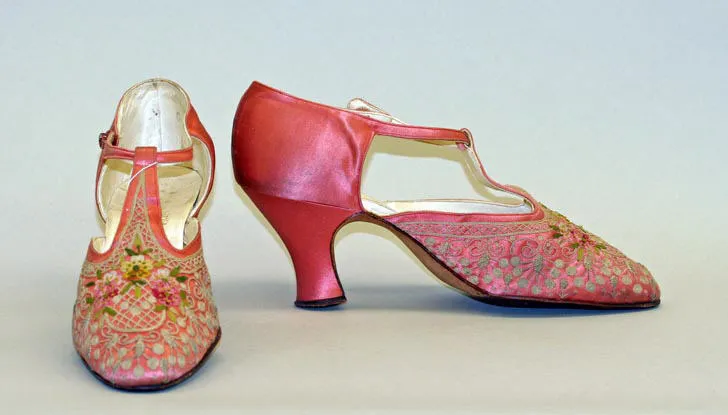
Stockings also became a more visible part of the outfit. Small evening bags could be embroidered with glass beads while evening mantles were sometimes made from silver lamé and trimmed with feathers.
The Chertsey Museum collection preserves examples of all three, including a beaded evening bag from about 1925 and a silver-lamé mantle trimmed with marabou feathers.
Were All 1920s Evening Dresses “Flapper Dresses”?
Only some 1920s evening dresses fit what we now call the flapper look. The word flapper described a modern young woman and her lifestyle rather than one official type of dress.
The style most closely linked with flappers had a straight or rectangular shape a low waist shorter skirt, and often beadwork, sequins or fringe that moved while dancing.
By the middle of the decade, these shapes had become fashionable far beyond young flappers and were worn by women of different ages.
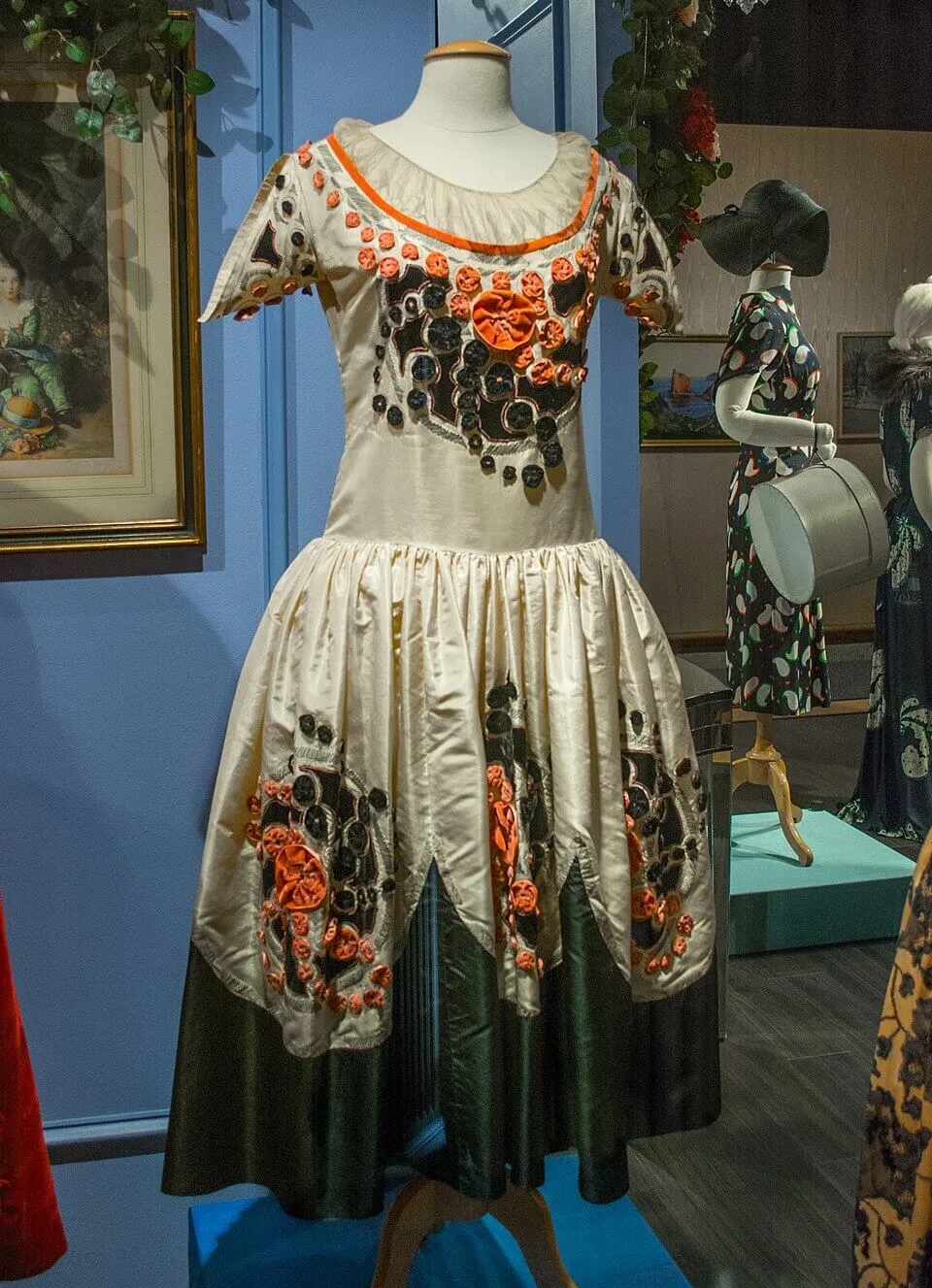
Other evening styles existed at the same time, including long formal gowns and Jeanne Lanvin’s fuller robe de style, which used a dropped waist with a much wider skirt. So a beaded, knee-length dance dress may match the familiar flapper image, while many other 1920s evening gowns looked quite different.
That's all for now but we would like to know, which 1920s evening dress style would you have chosen for a night out? Leave a comment below.
Comments · 0
Sort
Be kind — comments are public and follow the community guidelines.