
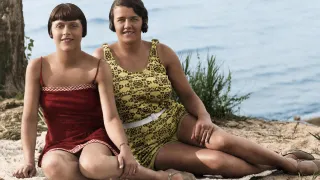
When we think of beach fashion today, it’s easy to picture colorful bikinis, sleek one-pieces, and light cover-ups. In the 1920s, the look was very different. Women wore knitted bathing suits, short skirted styles, rubber bathing caps, beach shoes, and sometimes stockings, while others were already going bare-legged. Robes, parasols, bags, and other accessories could turn a simple bathing suit into a complete beach outfit.
In this article
What Women’s Bathing Suits Looked Like at the Start of the 1920sHow Knitted Swimsuits Changed Women’s Bathing Fashion in the 1920sBathing Caps, Shoes, Stockings, Parasols, and Other 1920s Beach AccessoriesBeach Robes, Cover-Ups, and Beach Pajamas in the Late 1920s1920s Beach Rules, Suntans, and Changing Attitudes Toward Showing Skin
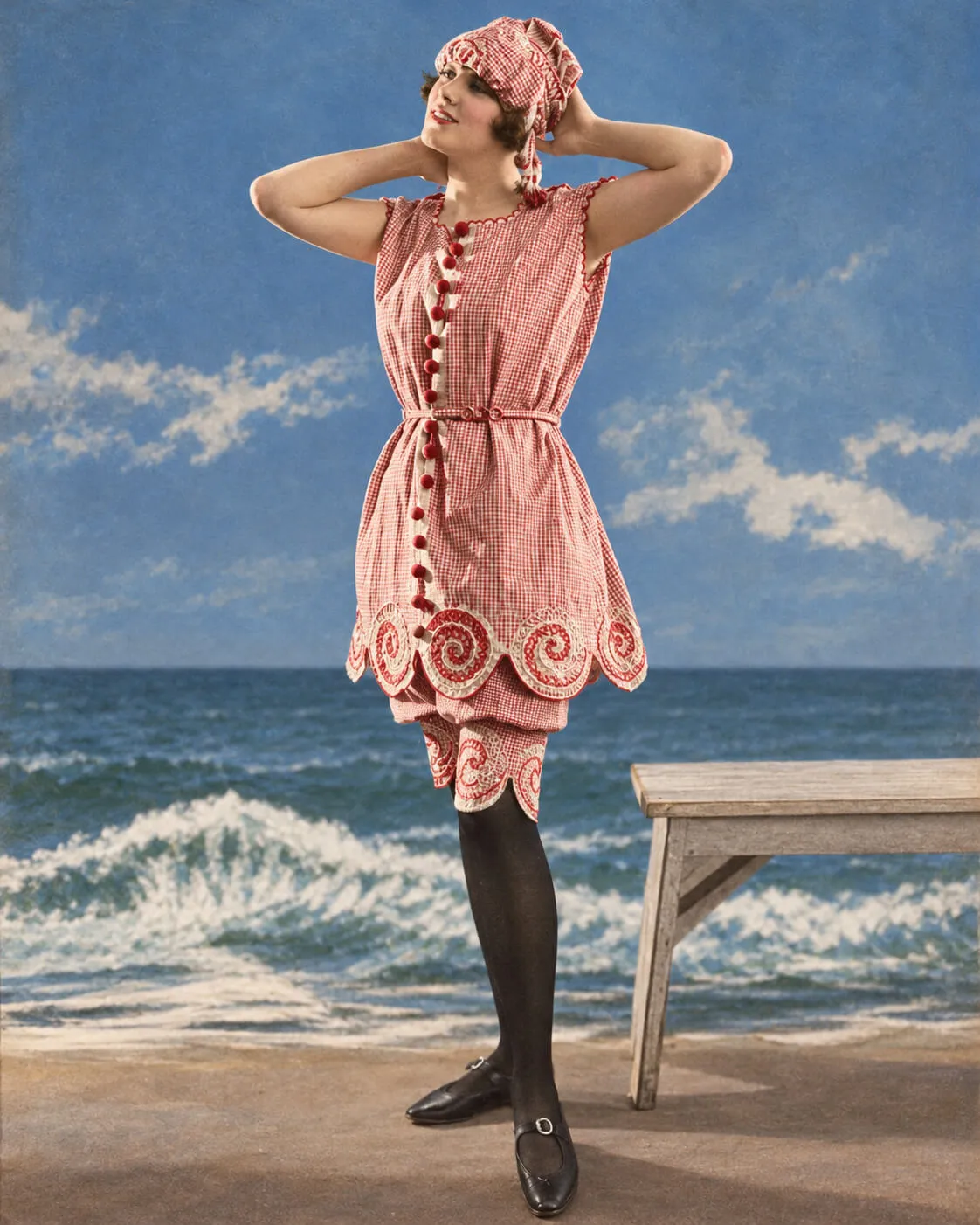
Beach fashion also changed a lot between 1920 and 1929. Suits became closer fitting, shorter, and better suited for swimming, while late-decade resort fashion brought colorful knits, smarter cover-ups, and even beach pajamas.
In this article, we’ll look at what women actually wore at the beach throughout the 1920s, how bathing suits changed during the decade, and the accessories and beach fashions that completed the look.
What Women’s Bathing Suits Looked Like at the Start of the 1920s
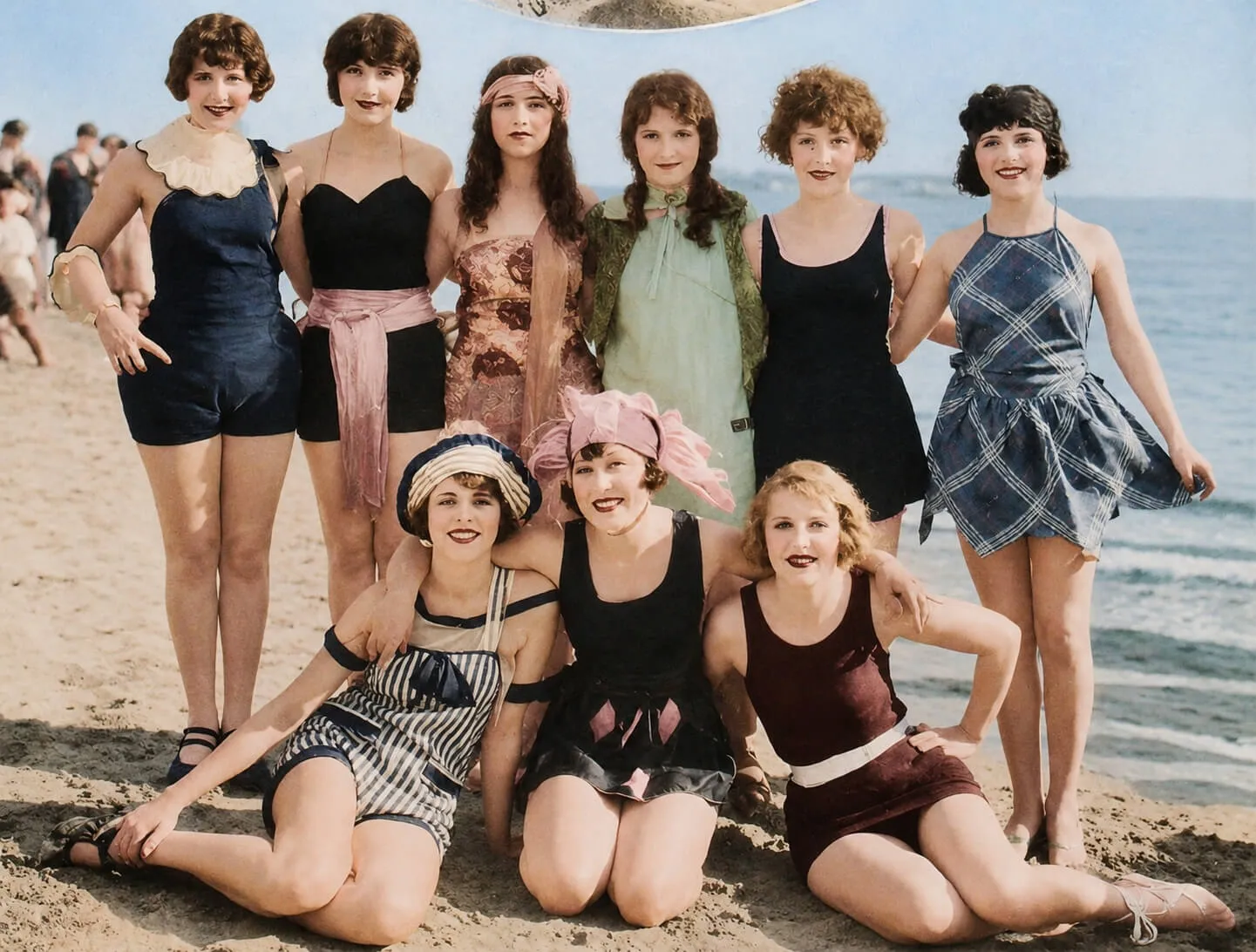
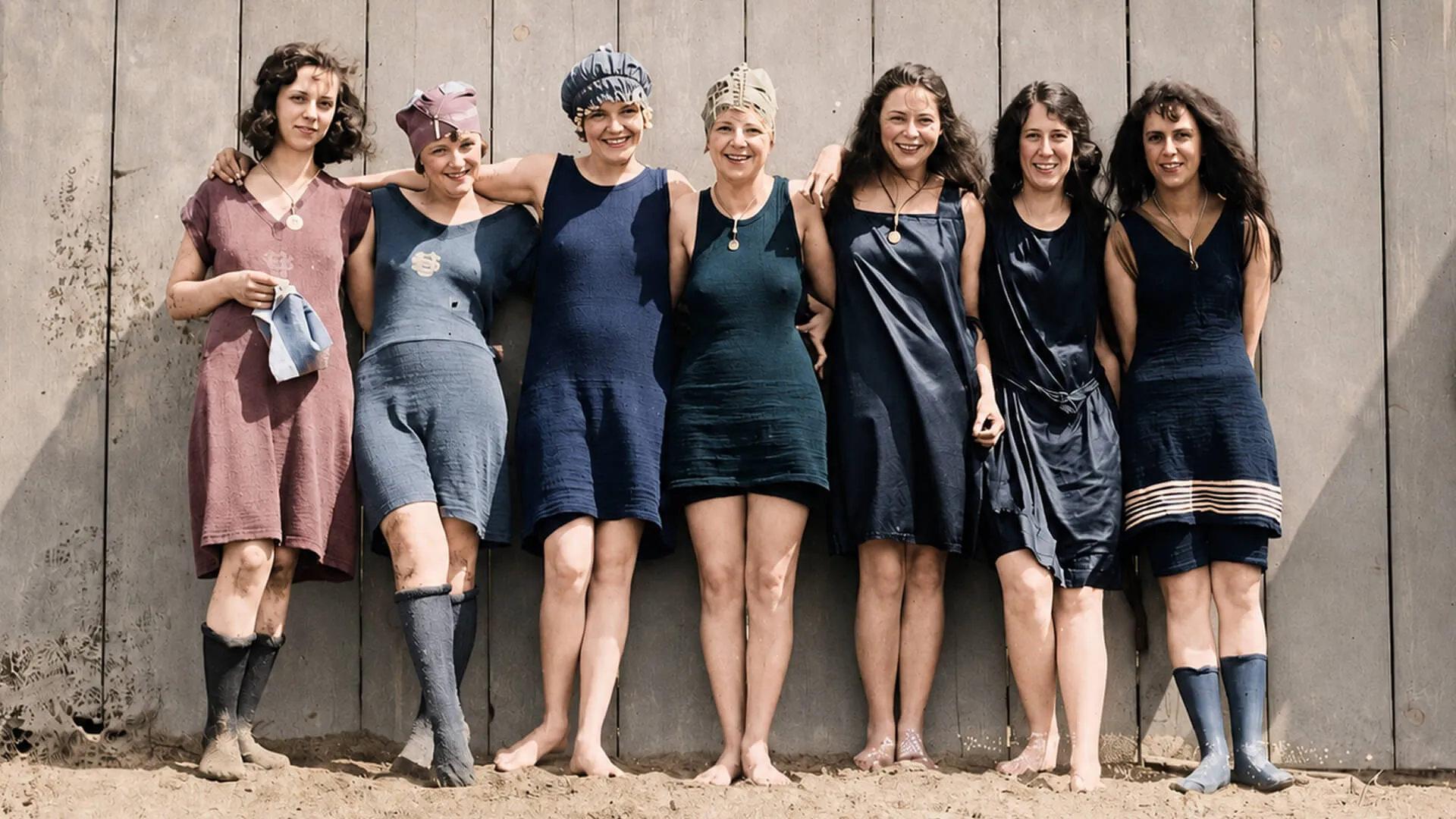
This 1924 group photo is a great example of how varied women’s bathing suits could already be early in the decade. Some of the women wear simple sleeveless suits with short trunks, while others have skirted styles, striped details, sashes, or more decorative tops. You can also spot bathing caps, headbands, and different necklines.
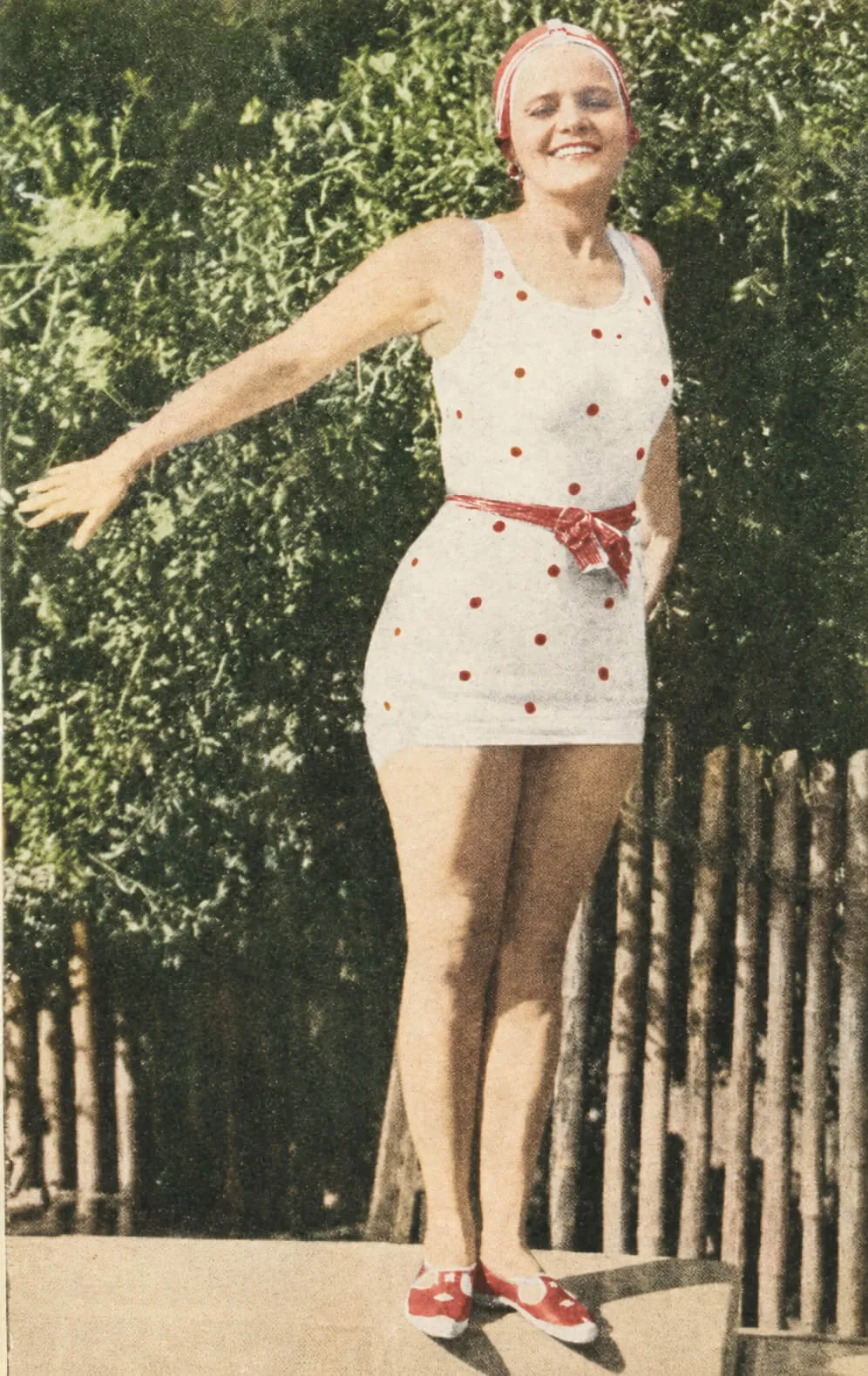
At the start of the 1920s, women’s bathing clothes were clearly in transition. You could still see suits with a short tunic or skirt worn over drawers or trunks, but simpler one-piece styles were already becoming familiar such the one you see below of actress Vera Reynolds.
Styles ranged from sleeveless designs to suits with cap or short sleeves, while necklines generally stayed fairly high. An old black-and-white one-piece bathing suit from about 1912–1922 has a V-neck, cap sleeves, and two buttons at one shoulder.
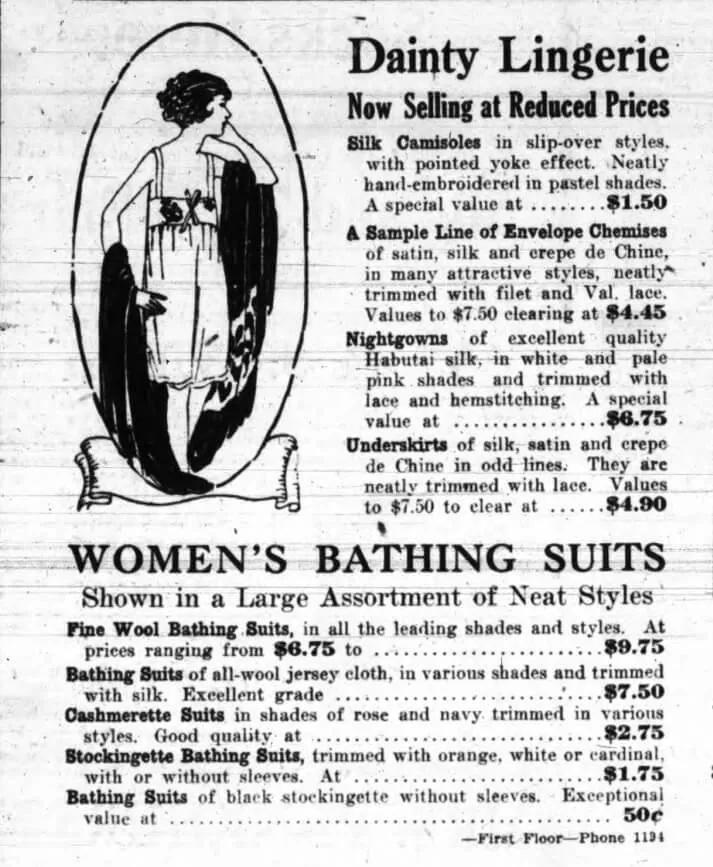
There was already plenty of choice in the shops. A 1921 department-store advertisement offered women’s suits in fine wool, all-wool jersey, cashmerette, and stockinette.
Some had sleeves and others did not. Navy, rose, and black were available, along with orange, white, or cardinal trim. Prices ranged from just 50 cents for a black sleeveless stockinette suit to $9.75 for fine wool styles.
Leg coverage varied too. At Washington’s municipal bathing beach in May 1920, many women were already wearing one-piece suits with bare legs. Yet stockings had not disappeared.
A 1921 photograph from Folly Beach, South Carolina shows women wearing their bathing suits with stockings and non-cloche hats. Bathing caps and shoes could also be part of the outfit, although we’ll look at those accessories more closely later.
Some suits were much dressier than the practical knitted styles seen at swimming beaches. A Bonwit Teller bathing suit from about 1920 was made from black silk satin and covered in tiers of silk fringe, with plastic buttons as decoration.
How Knitted Swimsuits Changed Women’s Bathing Fashion in the 1920s
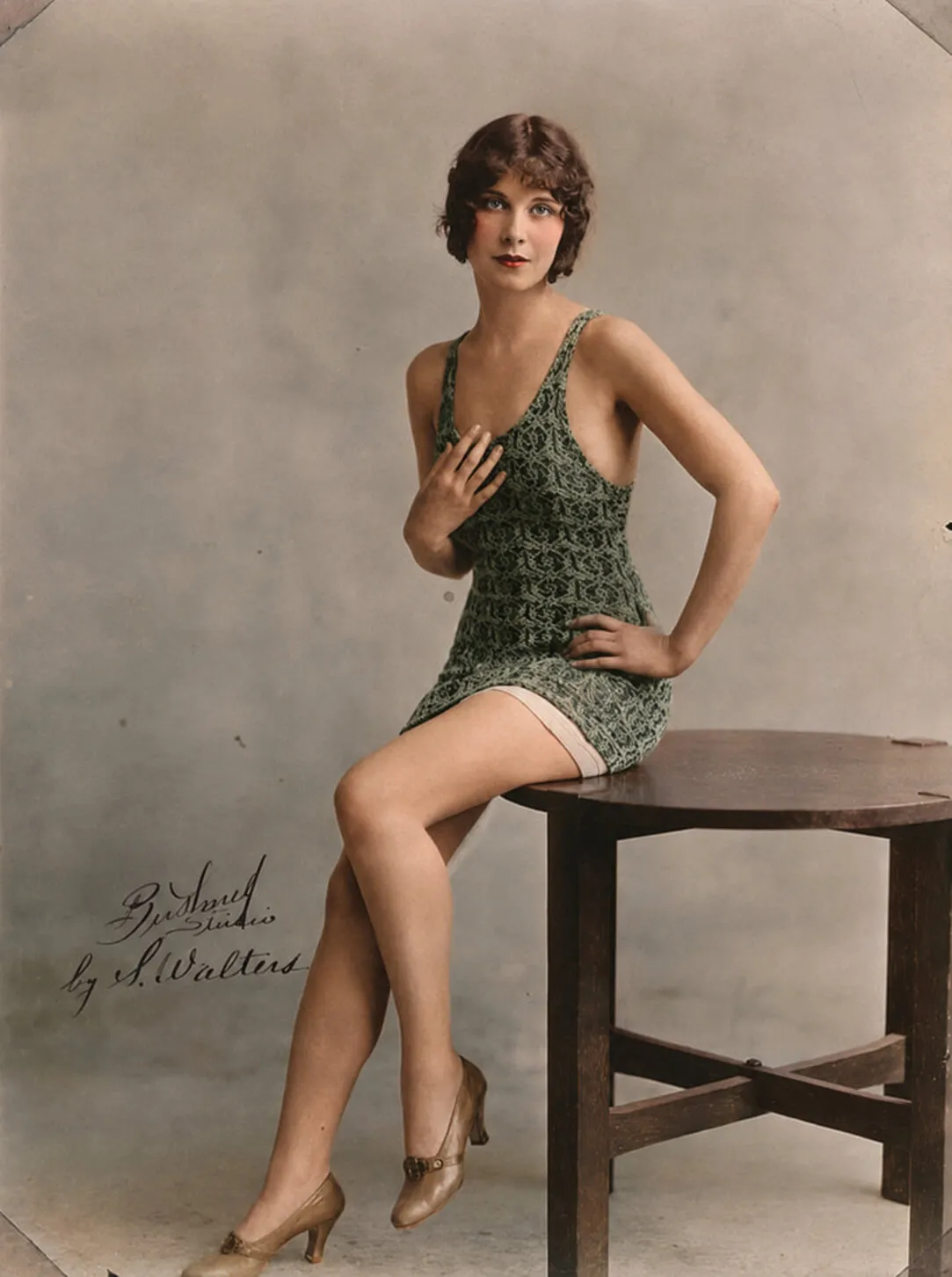
Back in the 1920s, bathing fashion got a sporty upgrade, and a lot of that had to do with knitting. Gone were the days of heavy, shapeless bathing costumes. Swimsuits got more fitted, more practical, and way more stylish.
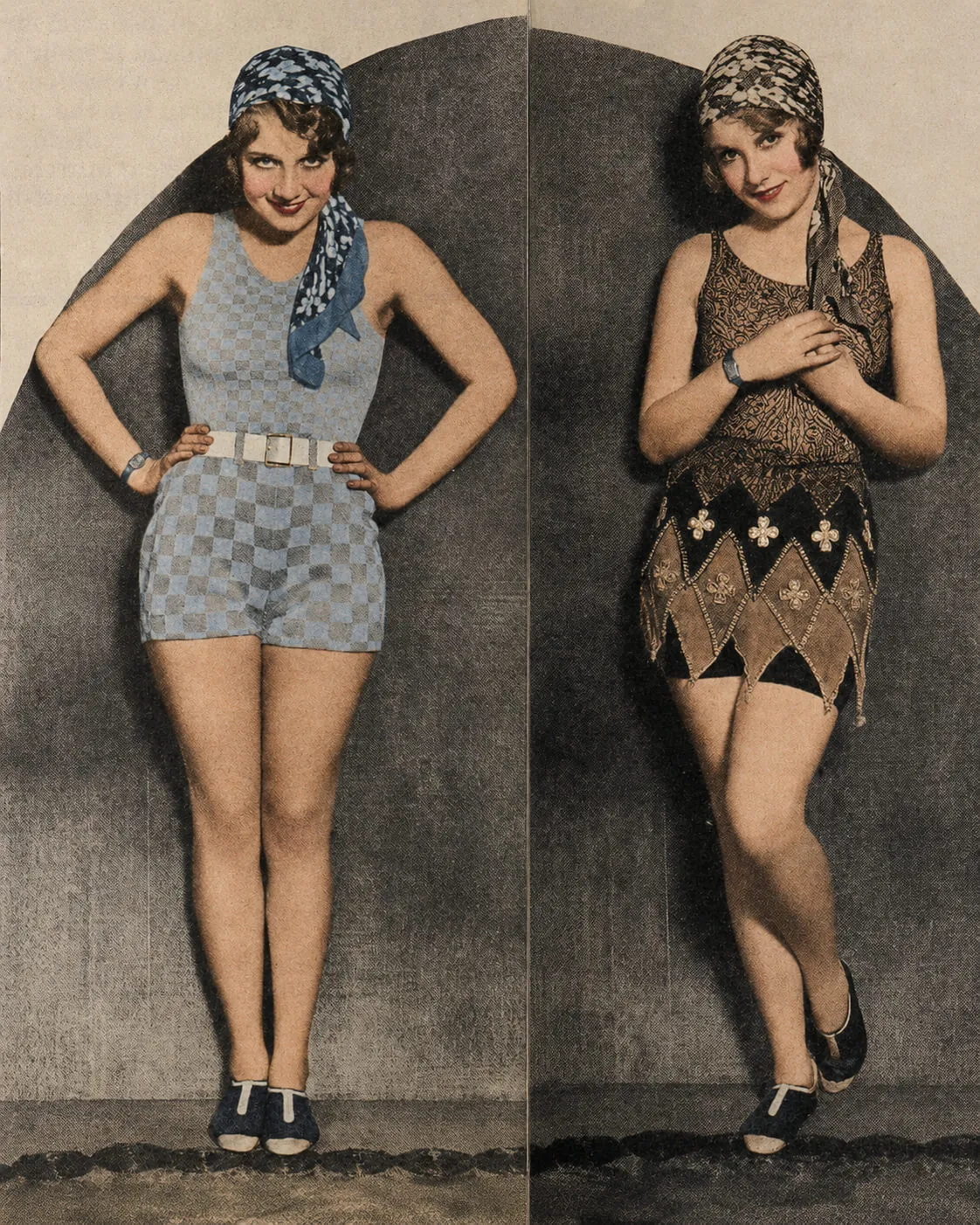
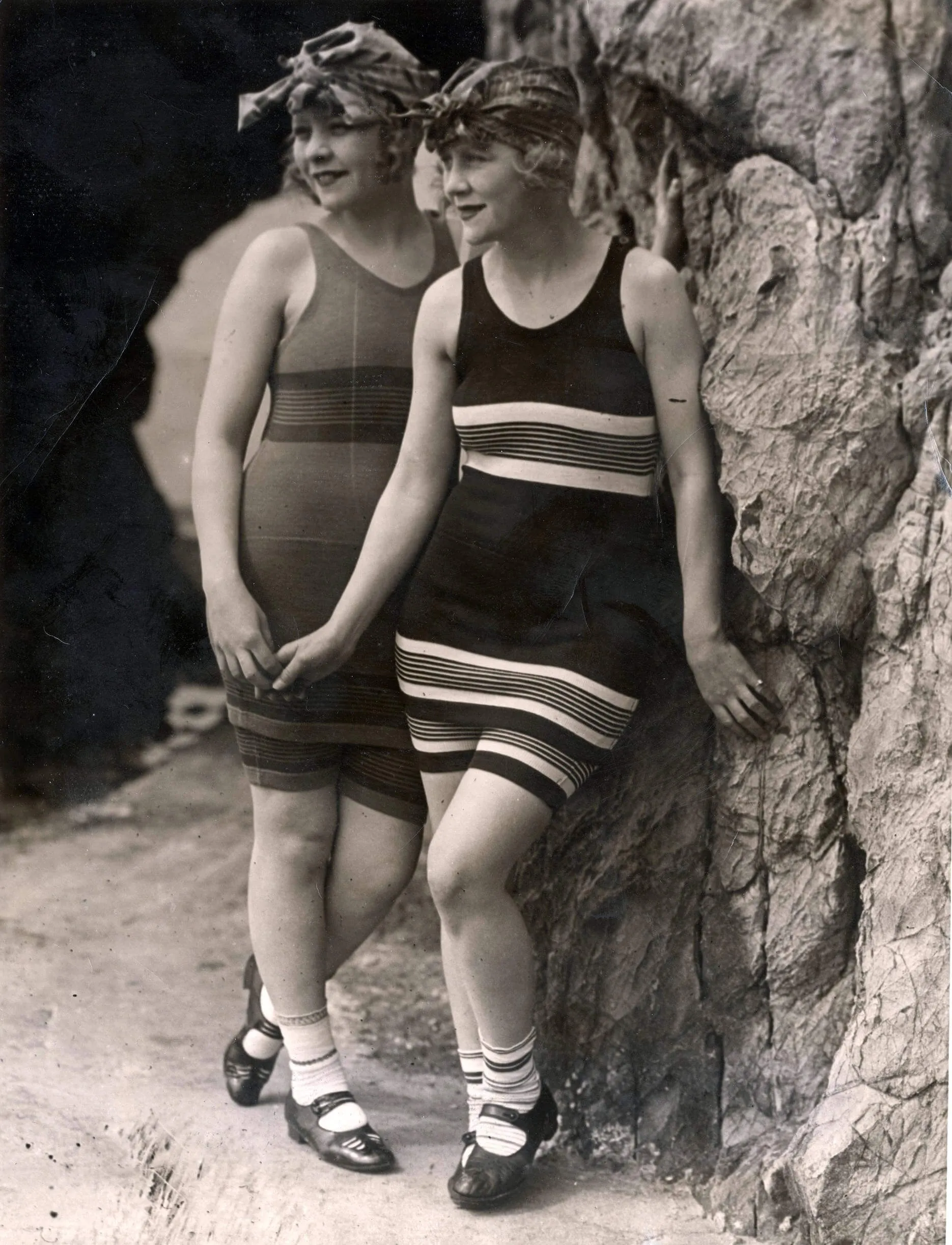
The picture above of Miss Seattle Leona Fengler and these two pictures below really show the shift. In the 1923 shot of Rosetta and Vivian Duncan, both are wearing snug, knitted bathing suits with short trunks underneath and those neat horizontal bands.
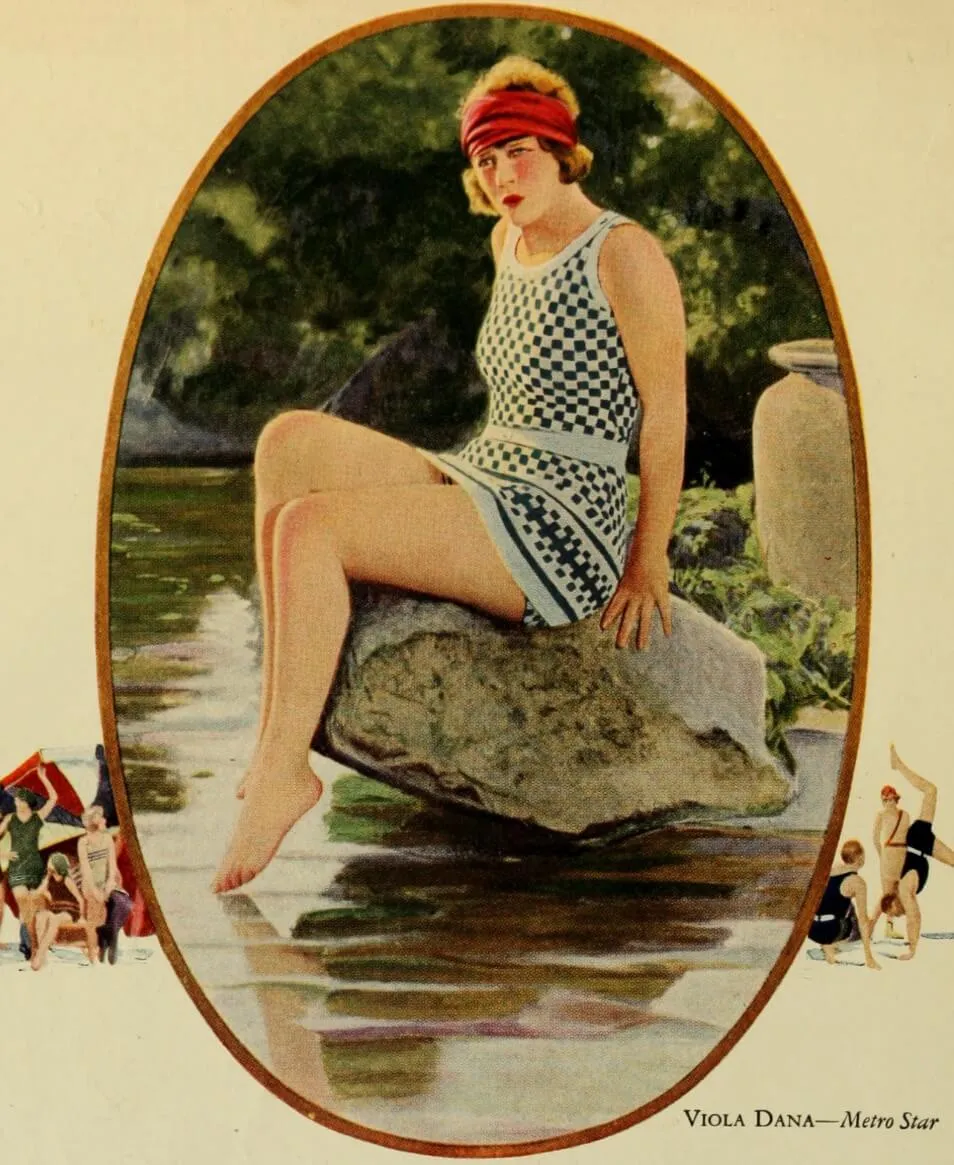
Then there’s Viola Dana in this Bradley ad from a 1924 Photoplay Magazine. She is rocking a similar idea: a sleeveless top with short trunks, but hers has a bold checkered pattern and stripes that are part of the style.
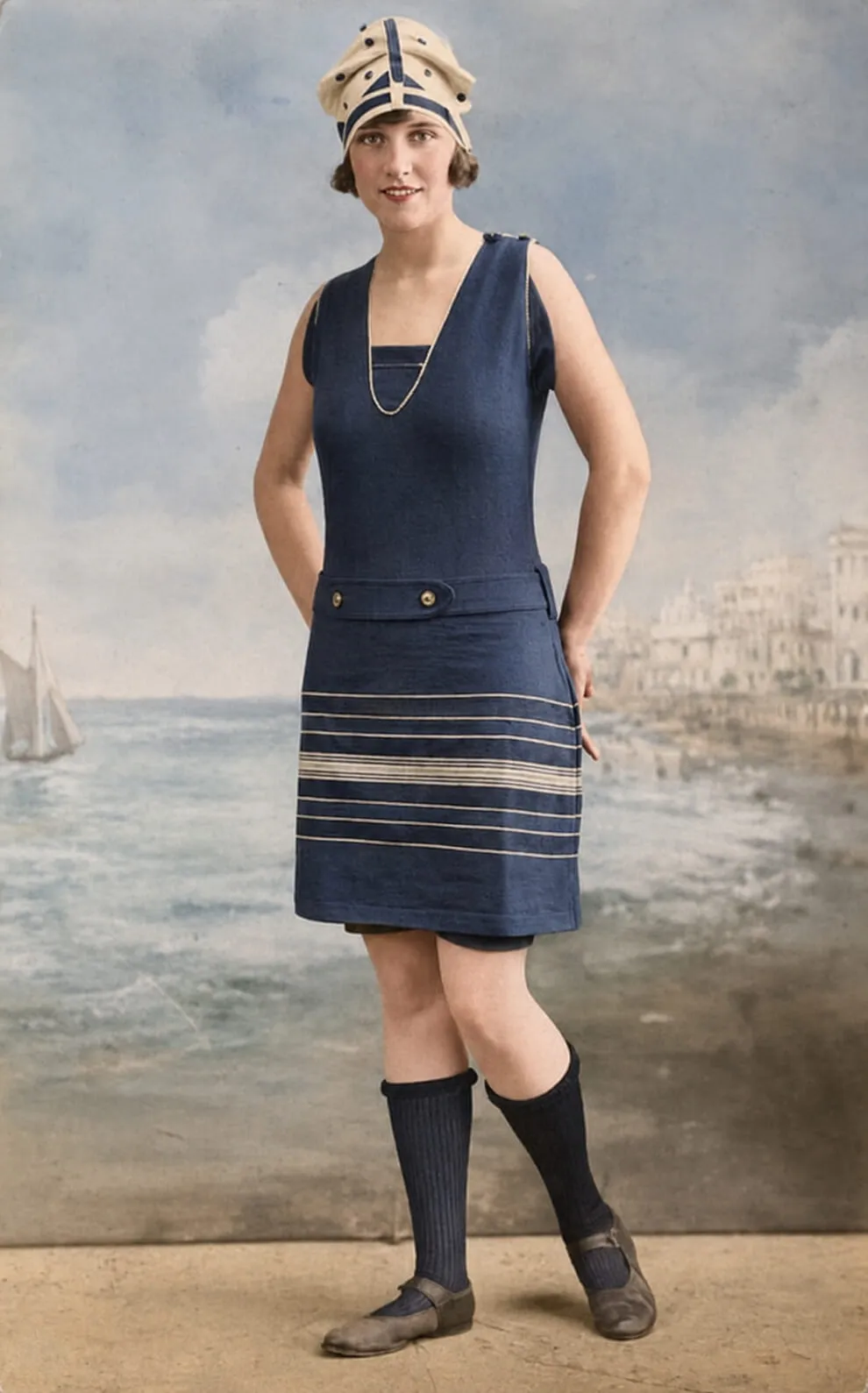
Knitted suits hugged the body way more than those old, baggy bathing costumes from the previous decades, and the short trunks let women swim and move easier. By the 1920s, swimsuits were getting simpler, sportier, and starting to look more like what we’d call a one-piece today.
The knit itself made a big difference. A 1925 Jantzen ad promoted elastic knit, pure worsted wool, reinforced construction, and even sizing based on a woman’s weight. Its slogan was “The suit that changed bathing to swimming.”
“You arise at twelve and don, by preference, a bathing suit, with plain trunks, usually in blue, and a white top.”
During the 1920s, “bathing suit” and “swimming suit” were often used for the same type of garment, but “swimming suit” put more emphasis on actually swimming. Jantzen began using the term to present its suits as practical sportswear rather than clothing meant mainly for bathing or wading.
Wool was common, but it wasn’t the only choice. A British cotton suit from about 1925 had a black body with orange-and-white Art Deco triangles around its short skirt.
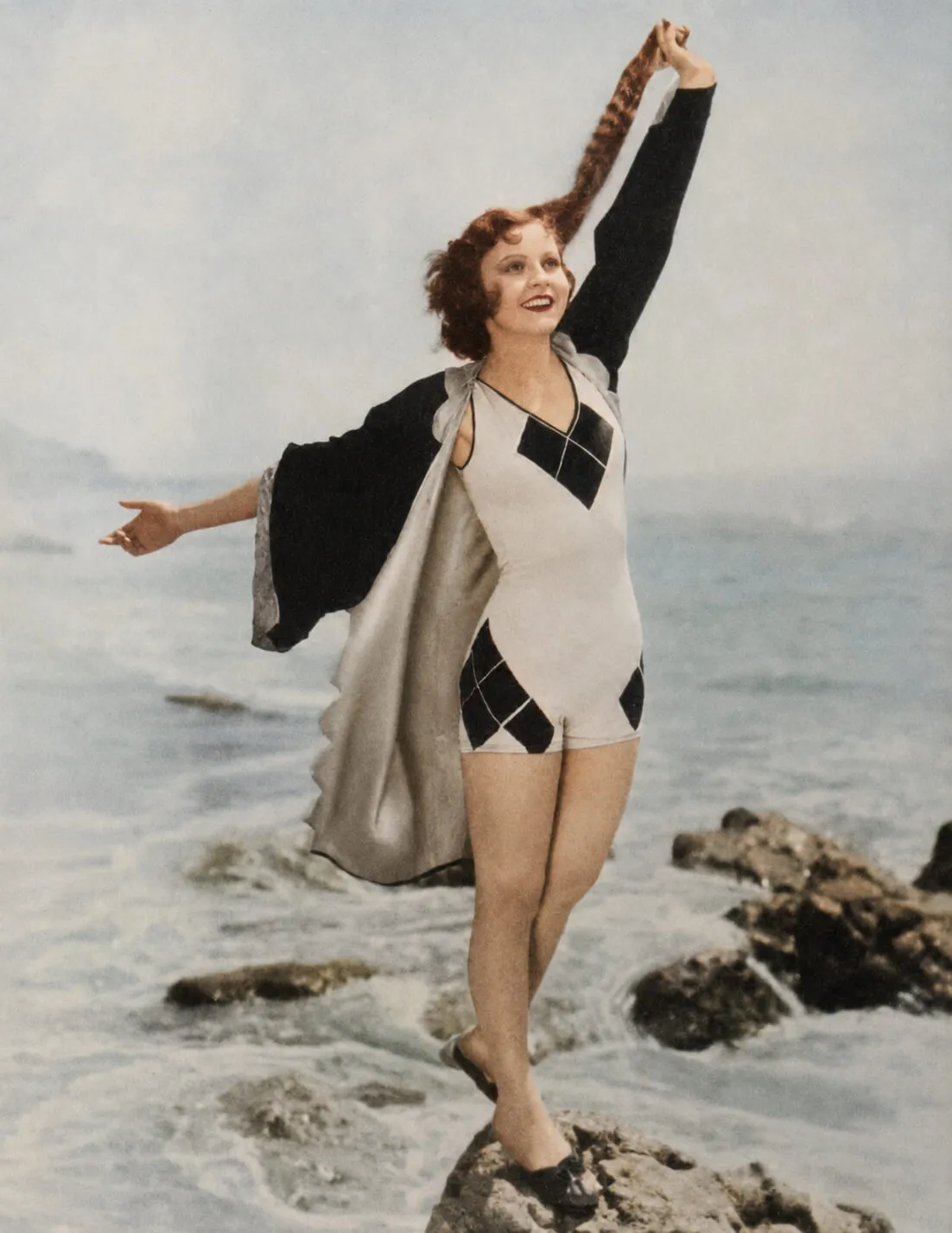
Silk was another option, as you can see in the 1929 photo above of actress Nancy Carroll. Her white silk jersey bathing suit has a simple sleeveless shape, short trunks underneath, and bold black satin squares for contrast, paired with a black velvet cape lined in white satin.
Bathing Caps, Shoes, Stockings, Parasols, and Other 1920s Beach Accessories
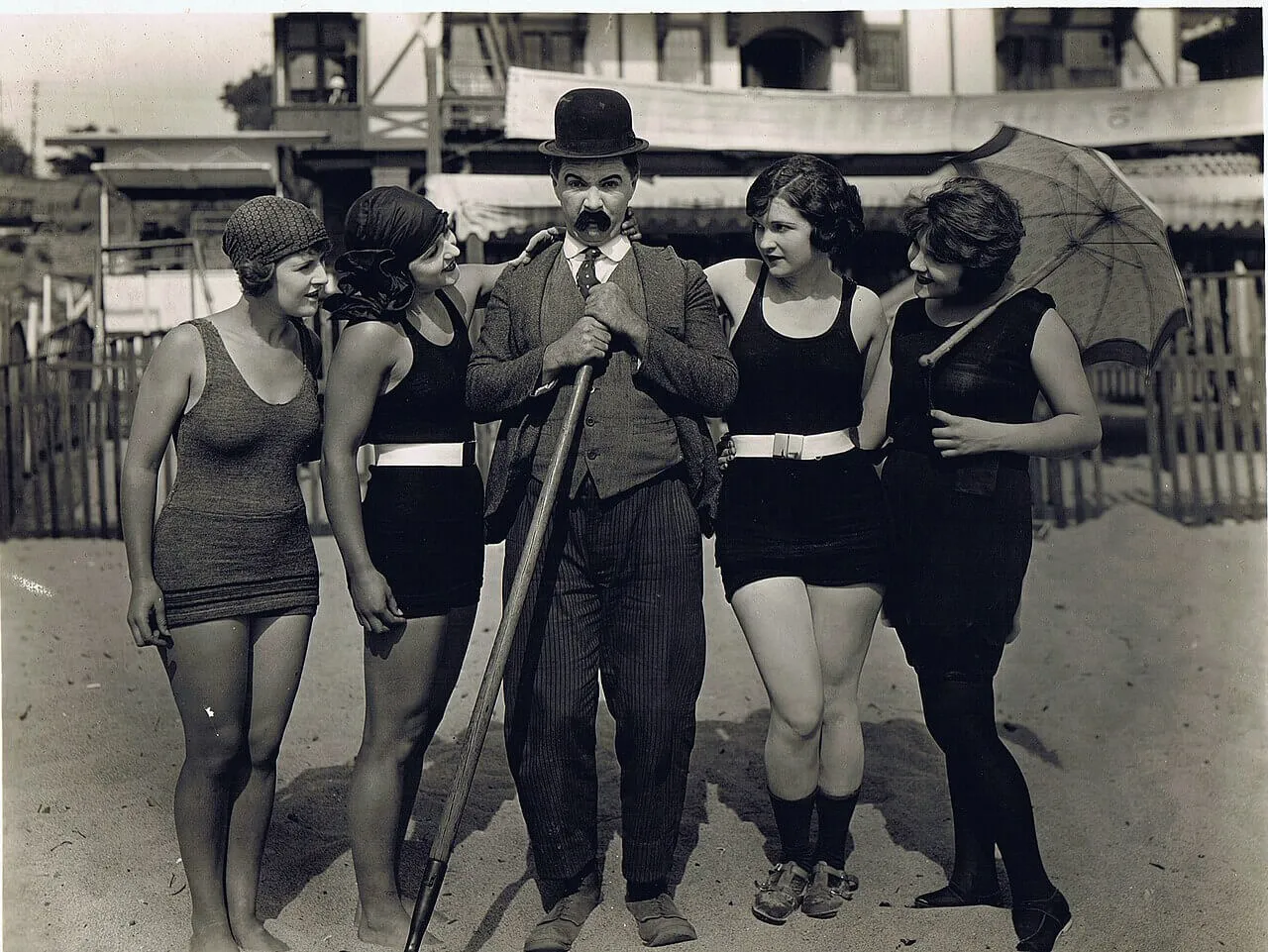
Some women still wore stockings with their bathing suits in the early 1920s, while others went bare-legged. The stockings themselves could be surprisingly colorful. A 1924 fashion column described bathing stockings in bright colors, with awning stripes and even fish and shell designs.
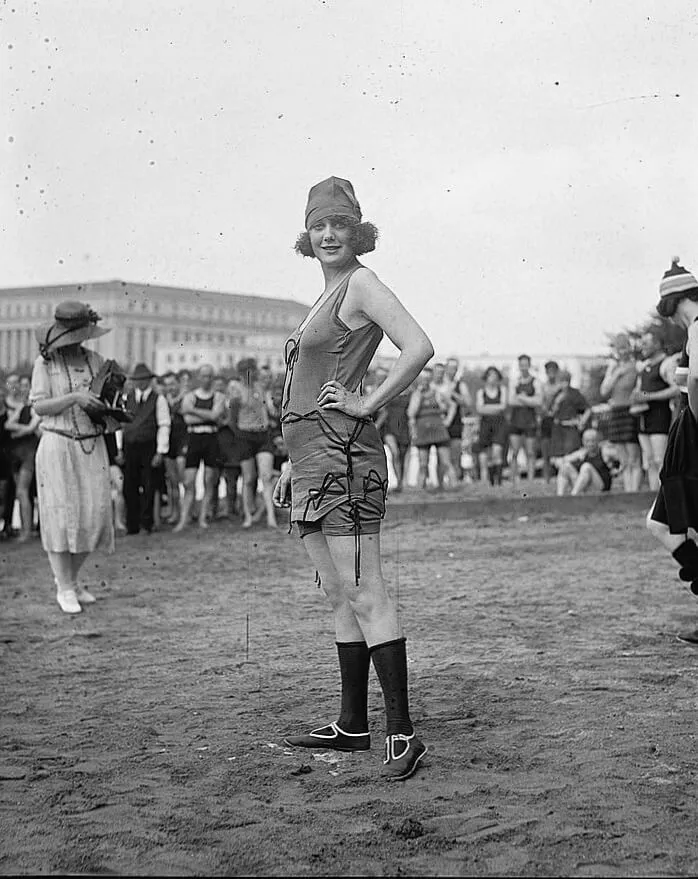
Bathing caps came in plenty of styles too, and they were especially useful when bobbed cuts and carefully styled waves were so popular.
A 1920 department-store sale offered bathing caps shaped like Tam-o’-Shanters and jockey caps, with prices ranging from 35 cents to $1.25 before the sale discount. By the middle of the decade, stores were also selling rubber belts, garters, and caps in colors meant to coordinate with a woman’s bathing suit.
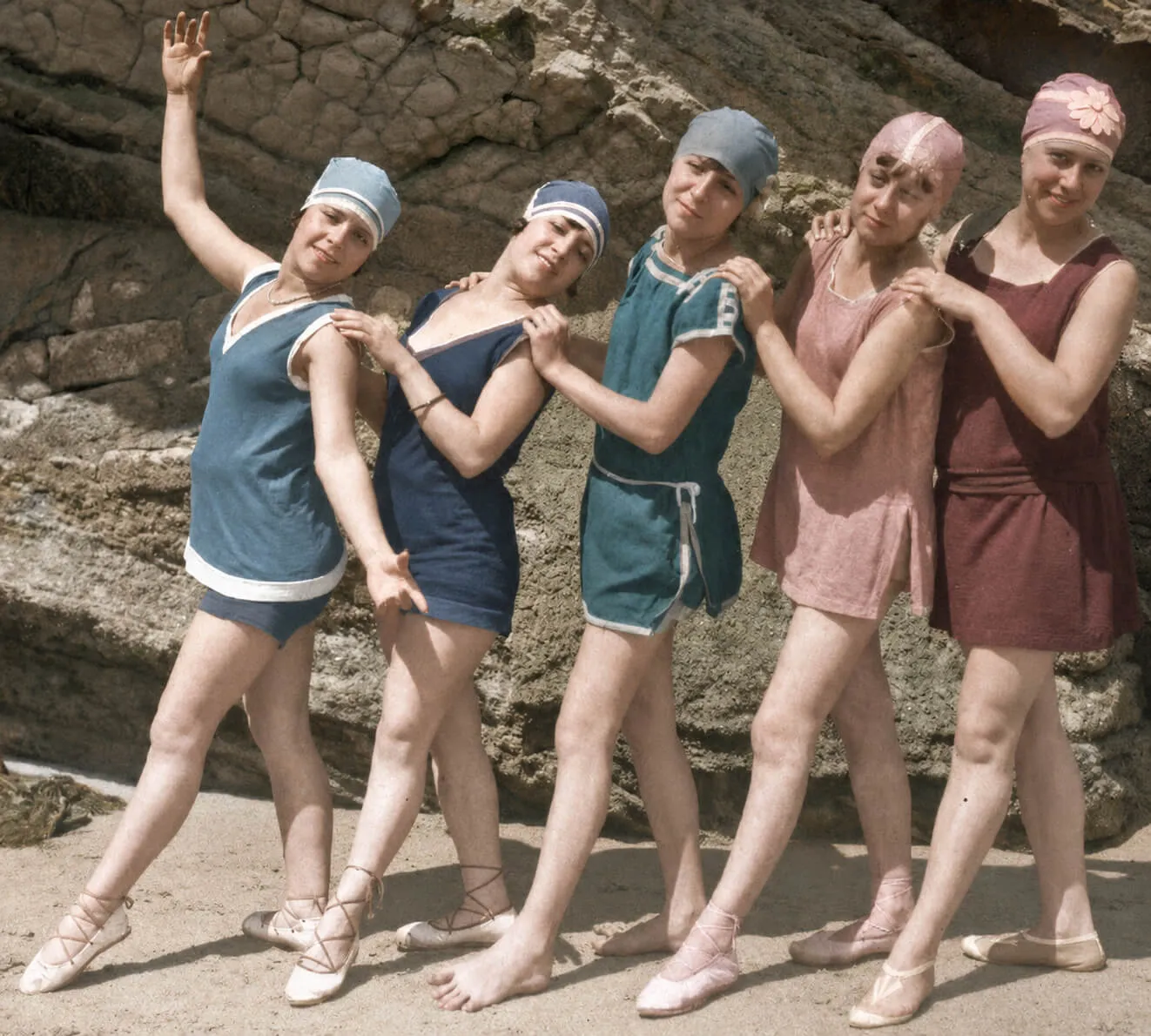
Shoes could match the outfit as well. In 1920, a Texas store advertised bathing shoes in red, blue, green, white, black, and mixed colors. Both high- and low-cut styles were available, priced from 85 cents to $1.50. Other stores sold white canvas bathing oxfords with thick braided hemp-rope soles.
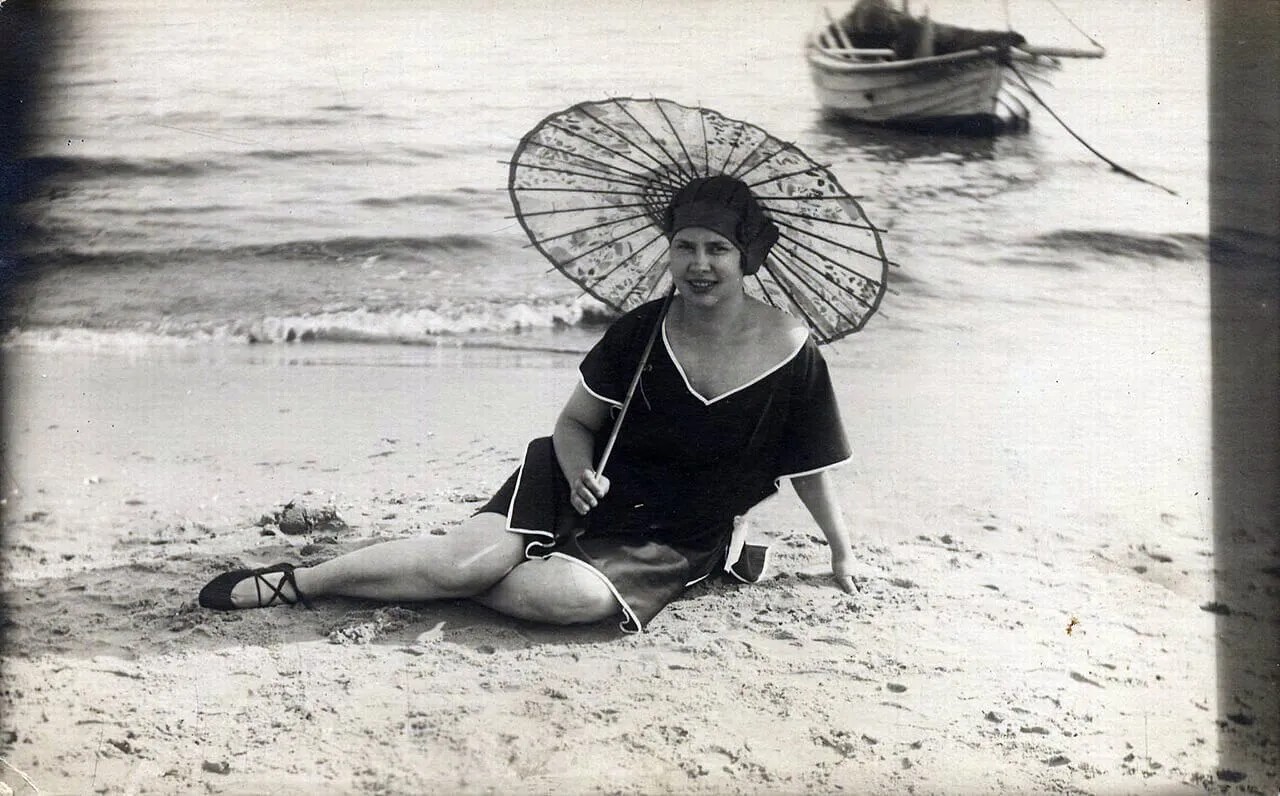
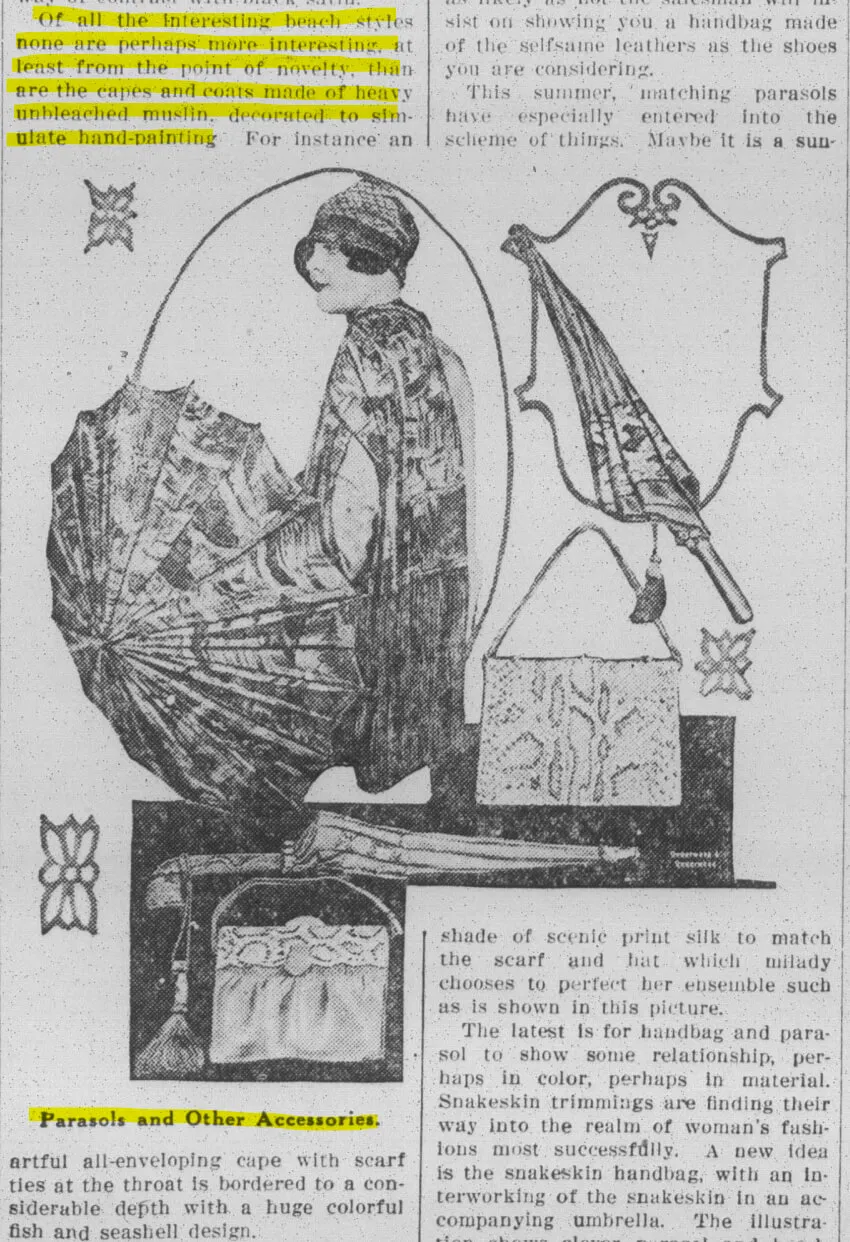
For women who wanted a more coordinated beach look, the choices went well beyond caps and shoes. The 1927 fashion feature shown below presented beach ensembles built around bright parasols, robes, sandals, caps, and colorful cushions. Parasols could even be chosen to match other parts of the outfit.
Shops also sold rubber-lined leather boxes with zipper openings for carrying a wet bathing suit home.
Beach Robes, Cover-Ups, and Beach Pajamas in the Late 1920s
A bathing suit was only part of what a woman might wear at the beach. Robes, coats, and jackets could be worn over the suit while relaxing on the sand or after a swim.
At Biarritz in 1927, women wore toweling coats over wool-jersey bathing suits. Matching long-sleeved jersey jackets were another option, especially for women spending more time on the beach.
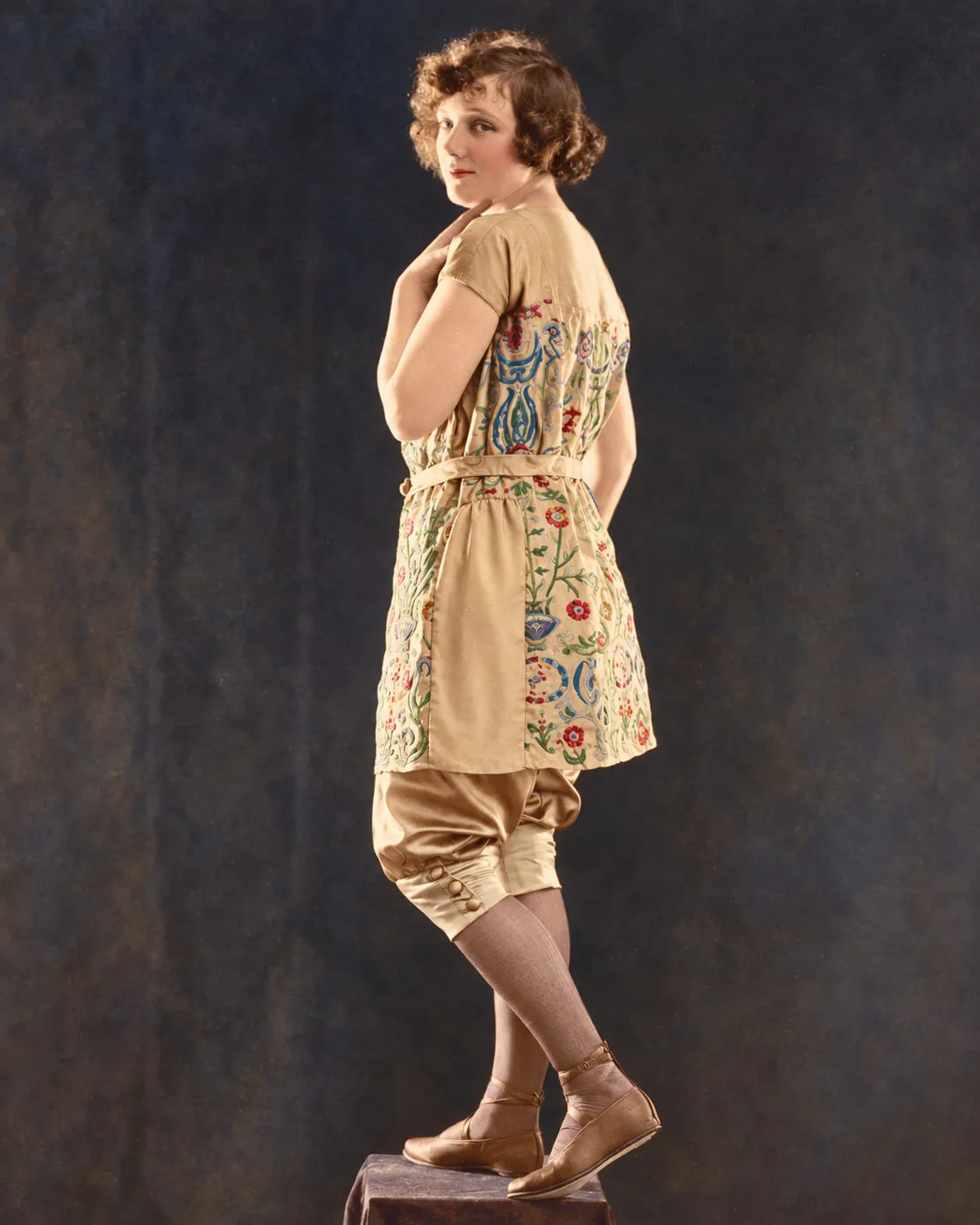
Pajamas were also becoming part of fashionable beachwear by the later 1920s. But they weren’t meant for swimming. Women wore these loose trouser outfits for relaxing at seaside resorts or walking along the promenade.
By 1929, beach pajamas could be quite dramatic. A surviving silk-satin set has wide flared trousers, a sleeveless top, and a loose jacket. The Fashion Museum describes this type of outfit as something worn at fashionable resorts such as Biarritz and the Côte d’Azur for relaxing on the beach or walking the promenade.
1920s Beach Rules, Suntans, and Changing Attitudes Toward Showing Skin
Showing up at the beach in a shorter bathing suit could sometimes get you more attention than you wanted. Some beaches had rules about how much leg a woman could show, and they could get surprisingly specific. In Washington, D.C., a 1922 rule said bathing suits could not end more than six inches above the knee. The 1922 photo above shows beach policeman Bill Norton actually checking a woman’s suit with a tape measure.
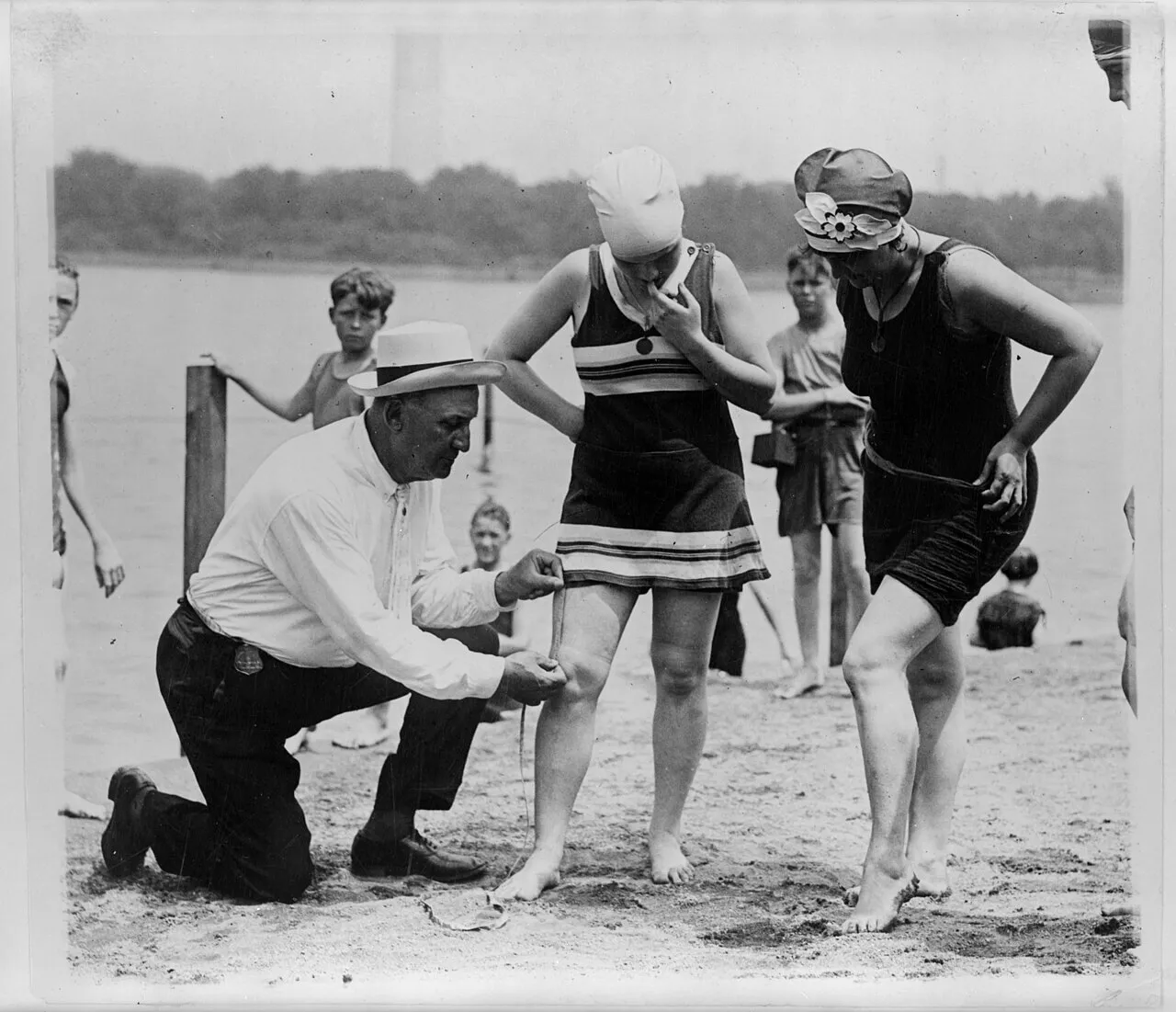
But these rules were not the same everywhere, or even from one year to the next. At the same Washington beach in 1920, women were already wearing one-piece suits with bare legs. Officials had even decided not to follow the stricter rules being used at Coney Island and Atlantic City. So while one beach might allow a fairly revealing suit, another could be measuring exactly where the hem ended.
Attitudes toward tanning were changing too. For a long time, a noticeable tan had been associated with working outdoors. By the late 1920s, though, tanned skin was becoming fashionable among many white women and was increasingly connected with vacations, sports, and time spent outdoors. Getting some sun was becoming part of the beach experience rather than something everyone tried to avoid.
It wasn’t always easy to enjoy the beach with tape measures checking your hemline. But from modest skirts to daring one-pieces, the 1920s left us with some iconic beach style. Which part of that era’s beach fashion would you have loved most? Let us know in the comments!
Comments · 0
Sort
Be kind — comments are public and follow the community guidelines.