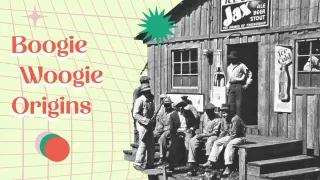
Imagine a smoky, dim-lit shack in rural Texas over a century ago. An old upright piano is pounding out a fast, rolling rhythm while folks clap, dance, and shout. This infectious piano music called boogie-woogie got its start in places just like that. In this article, we’ll explore how boogie-woogie first bloomed in Texas juke joints and barrelhouses, and how it went from local toe-tapping fun to influencing American music far and wide.
In this article
Origins in the Barrelhouses of Texas
The roots of boogie-woogie go back to the late 1800s in East Texas, deep in the pine forests. After the Civil War, formerly enslaved Black workers in Texas logging and railroad camps would unwind by making music on upright pianos.
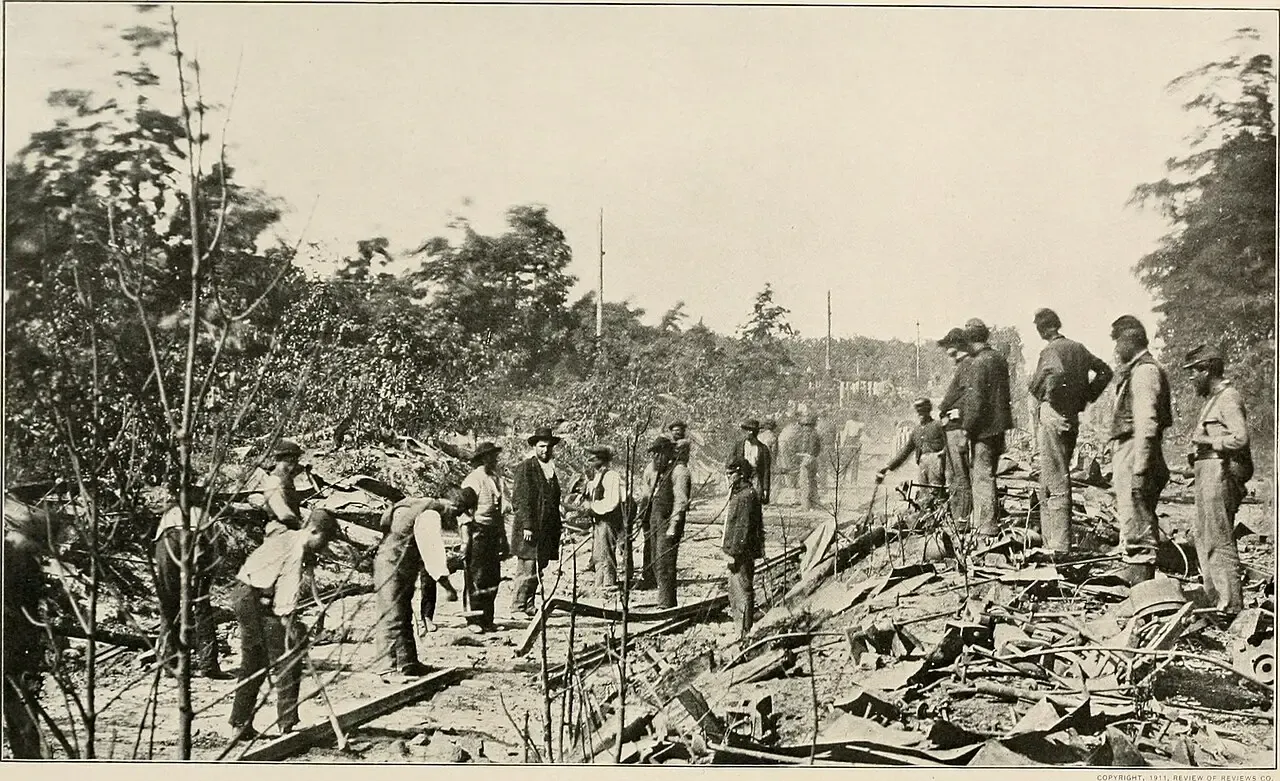
They developed a hard-driving blues piano style as a respite from their toils – pounding left-hand rhythms and upbeat melodies that got everyone moving. In these rough-and-tumble camps, makeshift taverns known as barrelhouses sprang up, offering cheap liquor and a place to dance. The piano became the star of the show.
Music historians have found that boogie-woogie was already being played in Texas by the early 1870s. In fact, many old-timers later agreed that the first boogie-woogie pianists were heard in the lumber and turpentine camps of East Texas in those years.
The Piney Woods region of northeast Texas, dotted with sawmills and newly built railroad lines, provided the perfect setting for this new sound. It’s no coincidence that the Texas & Pacific railroad reached this area in 1873, giving traveling piano players a way to move from camp to camp.
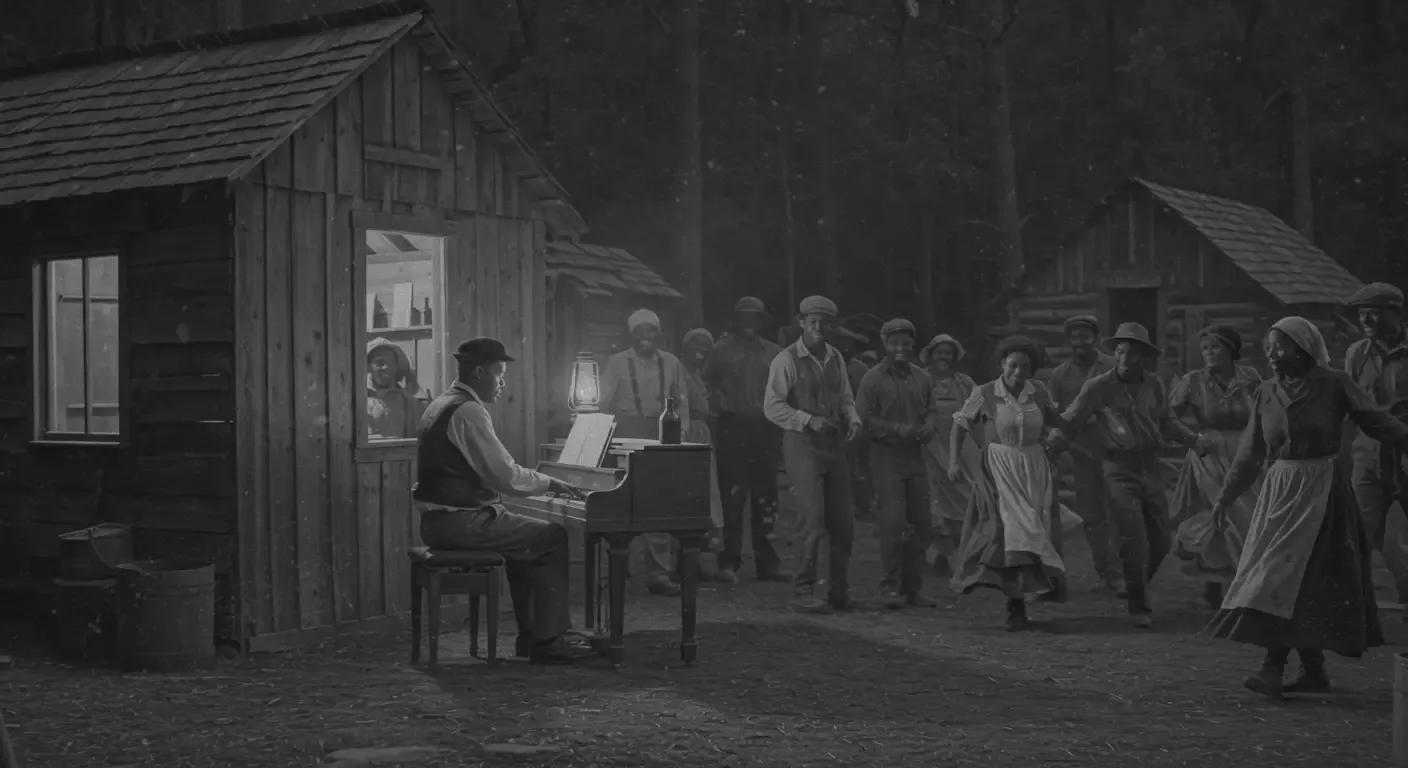
These pianists, sometimes called “ivory-smiths,” rode the rails to perform wherever workers wanted a party. The rowdy gatherings they played at were nicknamed “booga-rooga” parties by some, a playful term hinting at the boogie rhythm.
Life in the Texas Juke Joints
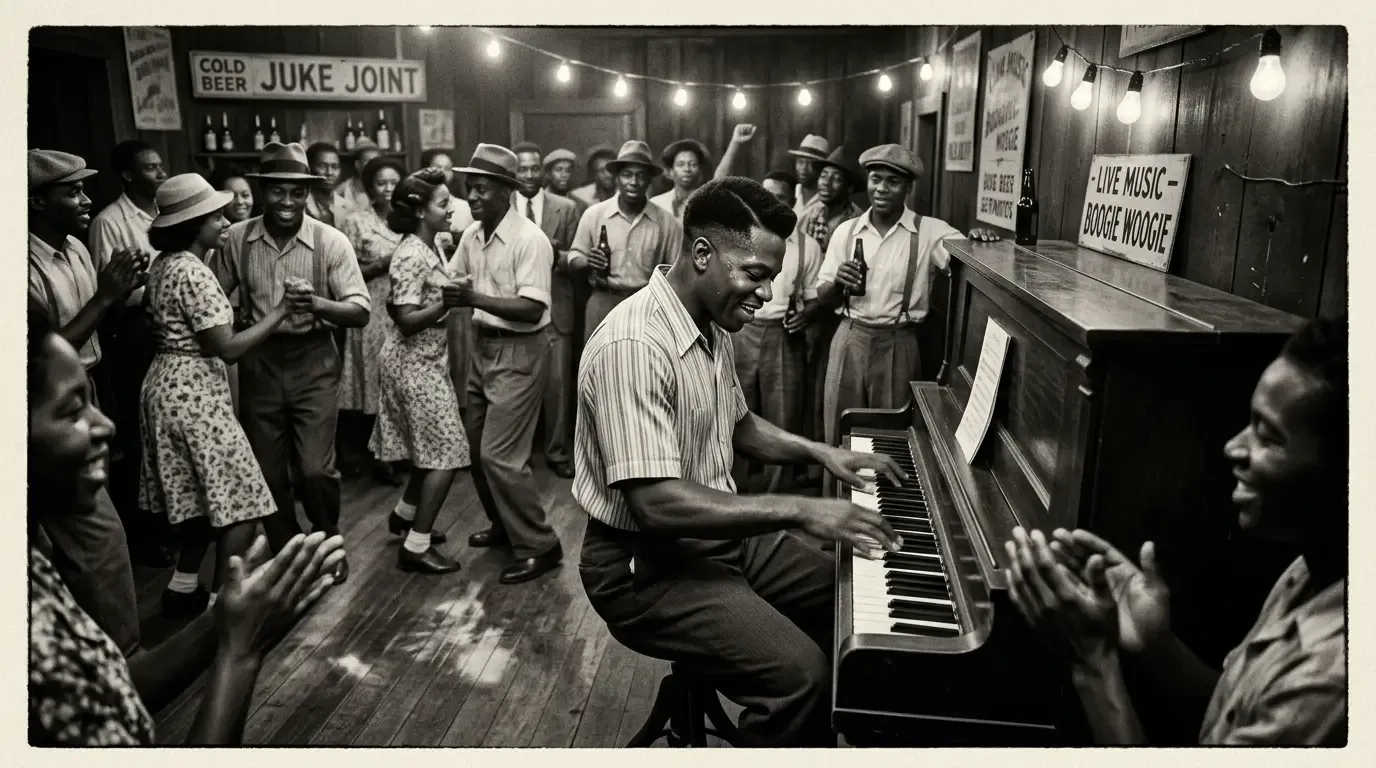
Juke joints (or “jooks”) were the small, home-grown music clubs of the rural South. In the Jim Crow era, Black Texans needed places to relax away from the oppressive laws and hardships of daily life. Ramshackle cabins and shacks, often set up on backroads or near work camps, became gathering spots that offered music, liquor, dancing, and community.
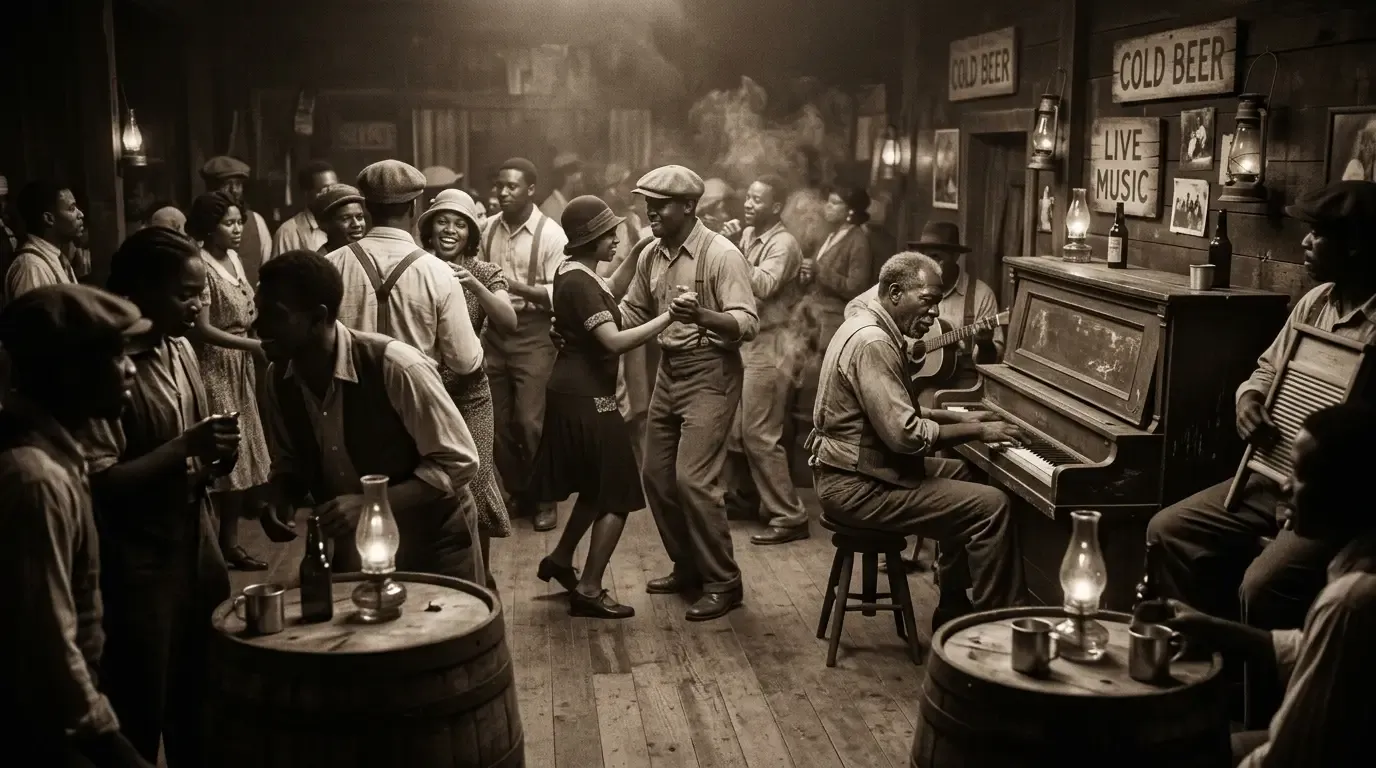
In these hidden nightspots, folks could sip on home-brewed whiskey or beer, dance with their sweethearts, and forget their troubles for a while. A piano in the corner was usually the centerpiece, thumping out blues and boogie rhythms long into the night.
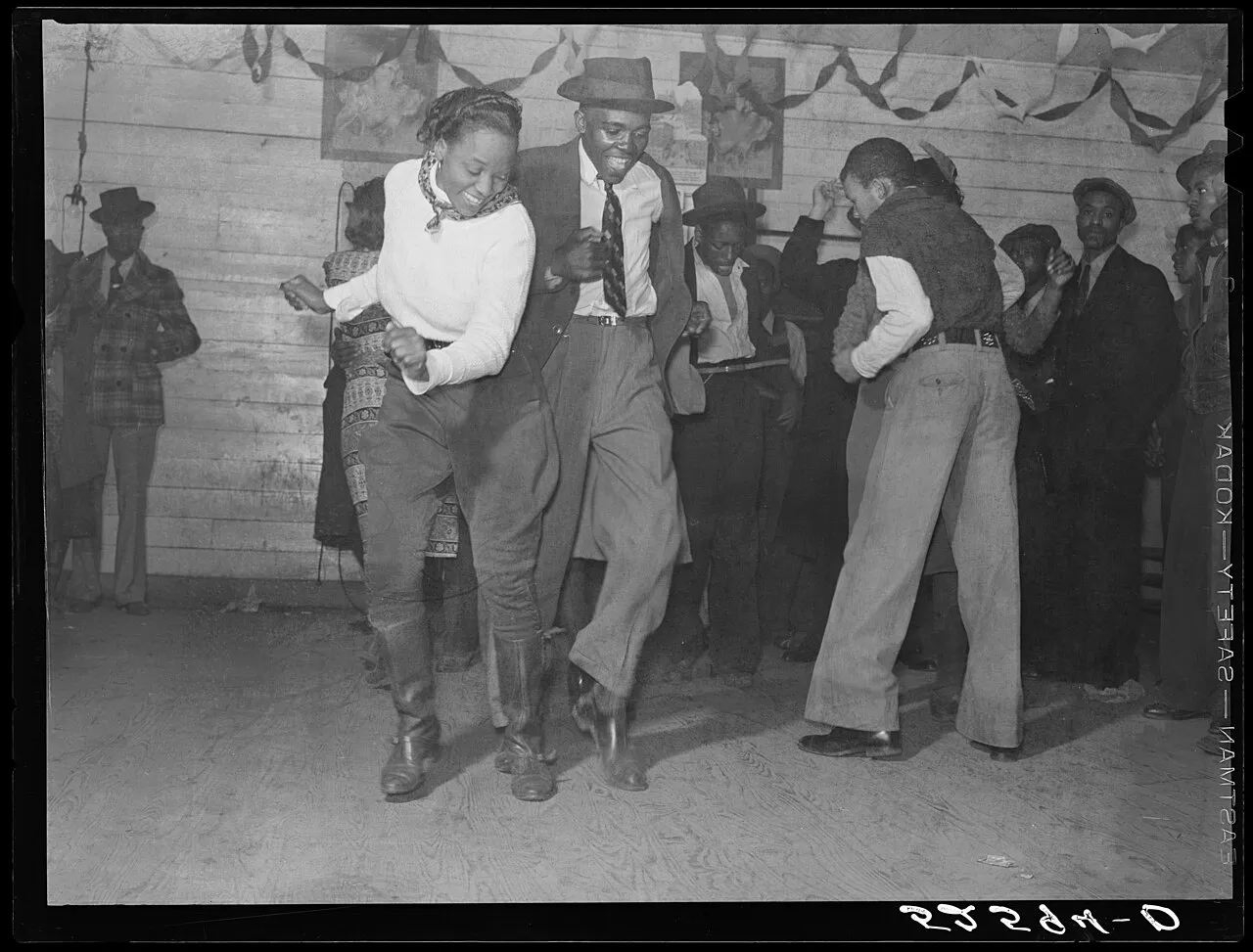
The term “barrelhouse” is closely tied to this scene. Many juke joints doubled as informal bars, often selling liquor straight from a barrel (especially during Prohibition or in dry counties). These joints earned the nickname “barrelhouses” because of the barrels of alcohol they kept on hand.
“The piano was throbbing like a stringed drum and the couples…were urging the player on to new lows.”
The atmosphere in a barrelhouse was lively and loose. As author Zora Neale Hurston once described walking into a juke.
The boogie-woogie piano style perfectly matched this vibe. It was all about letting go and dancing. With a strong, “eight-to-the-bar” beat (eight quick notes per measure), the music practically begged people to get up and move.
One hallmark of boogie-woogie is a rolling left-hand bass line that repeats steadily, almost like a chugging engine, while the right hand plays flashy melodies. In fact, the heavy left-hand rhythm was said to mimic the sound of steam locomotives chugging down the tracks.
In those Texas barrelhouses, you could literally feel the floorboards shake as the pianist’s left hand thundered out that train-like groove.
Early Boogie-Woogie Pioneers and Songs
Because this music grew up in informal settings, the earliest boogie-woogie players weren’t reading sheet music – they learned by ear and passed tunes around.
Most of their names never made it into history books, but a few pioneers from the Texas scene became known later on. Huddie “Lead Belly” Ledbetter, for example, grew up in northeast Texas and remembered hearing boogie-woogie piano as early as 1899 around Caddo Lake.
Huddie said those barrelhouse piano sounds influenced how he played guitar – he was one of the first to adapt the rolling bass rhythm of boogie-woogie into guitar blues.
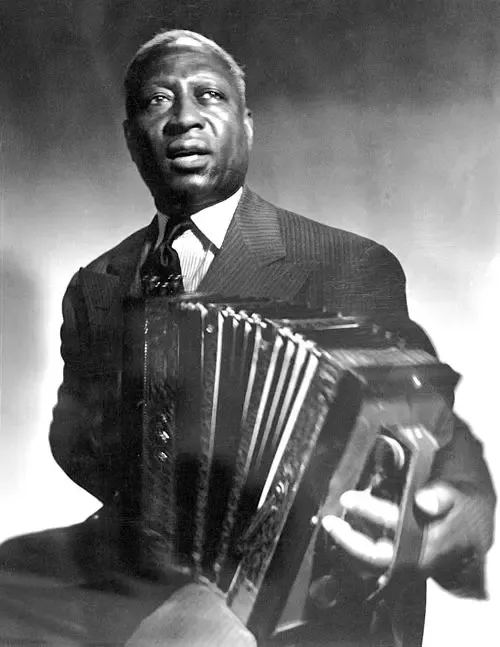
Legend has it that even jazz great Jelly Roll Morton encountered this piano style in Texas in the early 1900s and carried it into his own music.
By the 1910s and 1920s, a few Texas pianists carried boogie-woogie into the spotlight. Houston’s George W. Thomas Jr. and his teenaged brother Hersal Thomas were pivotal in this period.
George Thomas had grown up around the barrelhouse scene and later moved to urban centers like New Orleans and Chicago, bringing that “fast Western” piano style with him. In 1922, George and Hersal published a piano piece called “The Fives,” which contained many of the classic boogie-woogie riffs and bass lines.
This tune helped shape boogie-woogie into a distinct genre on sheet music and records. Around the same time, other Southern blues pianists like Charles “Cow Cow” Davenport were also playing in the boogie style.
Cow Cow Davenport recorded one of the first boogie-style piano records in the early 1920s – his song “Cow Cow Blues” (1925) featured a propulsive blues piano that would inspire later players.
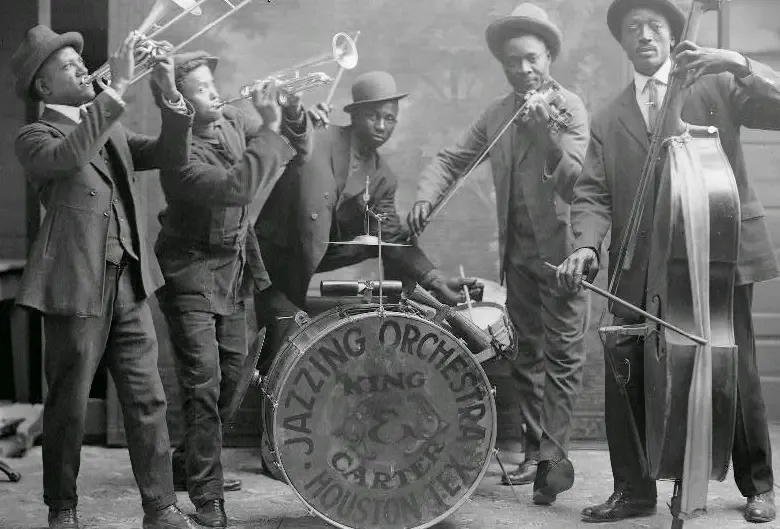
As boogie-woogie spread beyond logging camps and barrelhouses, it became part of the broader musical culture of Southern cities such as Houston, where jazz bands like the King & Carter Jazzing Orchestra and blues musicians were helping shape the sound of modern American music.
Perhaps the most famous early boogie-woogie hit came from a Texas-born pianist who never actually saw his success. Clarence “Pine Top” Smith was born in Alabama but performed around the South; by the late 1920s he was incorporating barrelhouse piano tricks into a song with spoken instructions for dancers.
In 1928 he recorded “Pine Top’s Boogie Woogie,” essentially telling listeners how to “boogie” on the dance floor. That record became a surprise hit in 1929 – the first boogie-woogie national hit.
Sadly, Pine Top Smith died only weeks after the recording was released, but his song’s popularity proved that the Texas barrelhouse sound could excite audiences far and wide. By the end of the 1920s, the word “boogie-woogie” itself (a playful doubling of “boogie”) had entered the mainstream vocabulary for this style of music.
From Texas Juke Joints to Worldwide Fame
By the 1930s, boogie-woogie was no longer confined to Texas. The Great Migration saw many African Americans move from the South to northern cities, and they carried their music with them. The boogie piano style spread to places like Chicago (where pianists like Meade “Lux” Lewis and Jimmy Yancey picked it up) and Kansas City.
In late 1938, the genre got a huge boost when three boogie-woogie pianists – Albert Ammons, Pete Johnson, and Meade Lux Lewis – performed at Carnegie Hall in New York. Their appearance at John Hammond’s famous “From Spirituals to Swing” concert ignited a national boogie-woogie craze.
Suddenly, this old Texas juke joint music was the hottest dance music in America. Big band leaders like Count Basie and Tommy Dorsey started incorporating boogie-woogie piano riffs into their swing arrangements, delighting jitterbug dancers.
Even country-western groups in Texas (like Bob Wills’ Texas Playboys) borrowed the boogie rhythm for Western Swing tunes.
Boogie-woogie’s driving beat was irresistibly catchy, and it kept evolving. In the 1940s it blended into the new rhythm & blues style – you can hear boogie piano in Louis Jordan’s jump blues and in early R&B hits. By the 1950s, that thumping left hand had made its way into rock ’n’ roll.
Early rockers like Little Richard and Jerry Lee Lewis played pounding piano that was straight out of the boogie-woogie tradition. Essentially, the joyous noise that began in Texas barrelhouses helped lay the groundwork for rock music’s explosive energy.
The lasting legacy of boogie-woogie
Today, boogie-woogie remains one of America’s most recognizable piano styles. Its influence can still be heard in blues, rock and roll, rhythm and blues, and even modern piano music. What began in the logging camps, railroad towns, and juke joints of East Texas eventually traveled across the country and around the world, leaving a lasting mark on popular music that continues more than a century later.
What is your favorite boogie-woogie song, artist, or recording? Let us know in the comments below. We’d love to hear your thoughts and recommendations.
Comments · 0
Sort
Be kind — comments are public and follow the community guidelines.