Prohibition-Era Habits and Hidden Worlds
Bathtub gin, blind pigs, wine bricks and doctors writing whiskey scripts. Thirty-three hard questions on how America drank when drinking was against the law.
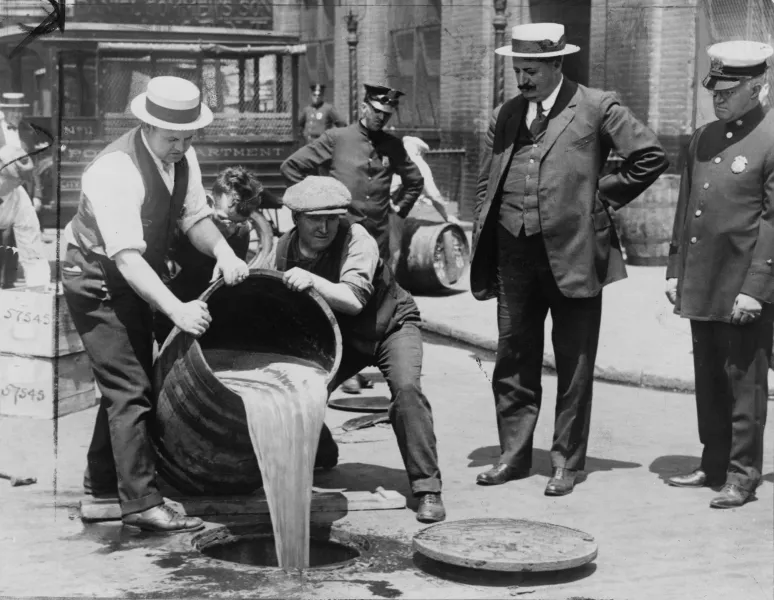 Prohibition Disposal, 1920sWikimedia Commons
How this quiz works
About this quiz
America spent most of the 1920s trying not to drink, and mostly failing. The ban was meant to empty the saloons and settle the country down. What it did instead was push drinking out of sight, hand a large and highly profitable trade to whoever was willing to break the law, and leave a great many ordinary people quietly ignoring a rule they had never asked for. A decade of raids, smuggling, hidden bars and improvised liquor followed.
This is a hard set of questions, and it goes well beyond the gangster films. It covers the law itself and the gaps people found in it, the smugglers who kept the supply moving, the agents sent to stop them, the campaigners who had spent decades pushing for the ban, and the clubs, drinks and slang that grew up in the middle of it. Most of what is here is stranger than anything a screenwriter would dare invent.